

 Español
 English

Why visit Elche
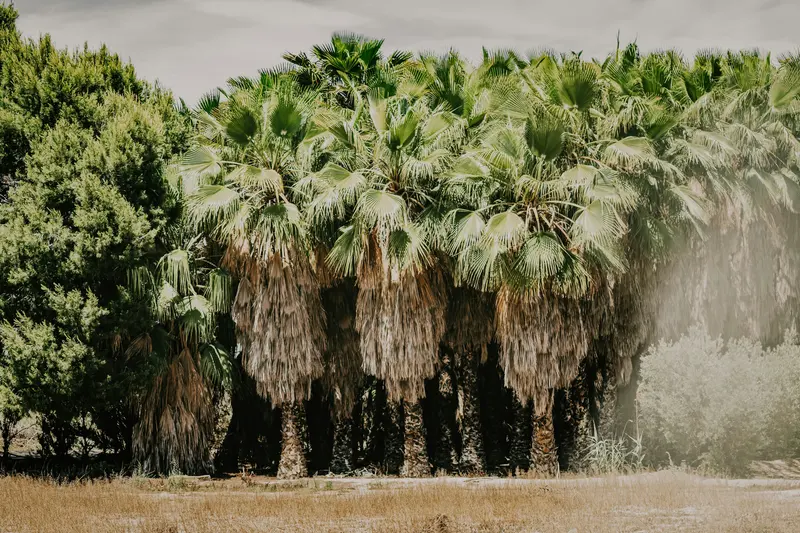
Start beside one of the palm orchards and look at how the rows of trees mark its edges. A short walk brings you to Santa María basilica and Altamira Palace. The short distance from cultivated plots to the centre’s streets and squares is what makes the palm groves such a useful way into Elche. Give them time beyond the best-known garden, the Huerto del Cura.
Elche is in the south of Alicante province in the Valencian Community. You will also see the Valencian name Elx on signs, museums and railway maps. The historic centre is inland, while the municipality extends to the Mediterranean. One trip can focus on the palm groves and the Mystery Play. With longer you can add an archaeological site to the south or spend a separate day among the dunes and wetlands. For an introduction in a single day, the orchards and old town make a satisfying route on foot.
When to go
Spring and early autumn give you time to walk through several orchards in one outing. Look for the shade between palms and allow for open streets between the groves. Visit the orchards while the light helps you distinguish the rows and irrigation channels. When it is hot, break up the walk with the Palm Grove Museum or the archaeological and history museum in the Altamira Palace complex.
In August, the patronal celebrations change the pace of the city. If the Mystery Play is the reason for your visit, use the programme for that year to organise your stay, allowing a separate day for the beach. At other times, you have more scope to combine a long walk with a museum. Winter can work for the old town and the Vinalopó river in the middle of the day. Out at the wetlands, birds vary with the season and water levels, and your view depends on which routes are open.
Getting there and around
Reaching the centre and recognising station names
Alicante-Elche Miguel Hernández Airport is in the municipality, several kilometres from the historic centre. In 2026 Aena listed a bus between the airport and Elche. Check where it stops before planning the onward trip to a beach address or a city hotel. Renfe’s local rail map distinguishes Elx-Parc and Elx-Carrús. Elche Alta Velocidad is a separate station for high-speed services that call there. Use the name printed on the ticket when looking up directions.
Elx-Parc is on the side of the Municipal Park and the historic centre. It makes a useful starting point for a visit on foot, with the Vinalopó river as a reference on the way to Altamira Palace. The centre and the nearest groves fit in one outing. The archaeological site at l’Alcúdia, the school museum at Puçol and the beaches all need separate travel plans. Each takes you in a different direction from the main old-town circuit.
Outlying settlements and the coast
Torrellano is part of Elche municipality and is close to the airport. El Altet and Arenales del Sol are different names to look for when planning a coastal outing. Search for the exact beach entrance, particularly around the dunes, where a promising line on the map may lead away from the marked access. Use current travel information and leave some leeway if your return has to meet an onward train or flight.
What to see in Elche
Municipal Park and the Palm Grove Trail
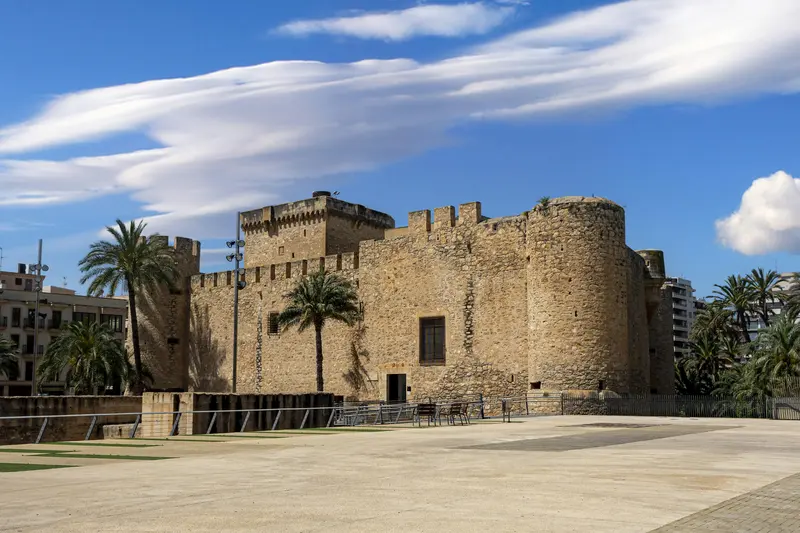
Begin in the Municipal Park near Altamira Palace. It gives you a first look at the relationship between the town and the palm groves. Look for where the rows start and finish and where the spaces between them open up. The signed Palm Grove Trail passes through a series of plots. Take the longer circuit if the landscape is the focus of your day, or follow a short section between town and the Huerto del Cura.
As you walk from one plot to another, notice the shape of the enclosures. Palms often stand along the edges, helping to frame space for other crops and creating sheltered ground. The VisitElche trail map can help you visualise the pattern before you set out. Parts of the route use ordinary streets, so check which access is closest if you intend to do a portion of the walk and turn back for lunch in town.
Huerto del Cura and Huerto de San Plácido
Huerto del Cura is an established garden with the branching Imperial Palm as its best-known tree. Allow time to explore the rest of the collection. Date palms grow alongside cacti and plants from other parts of the world. Follow it with a walk through the more traditional plots for a sense of the difference between a garden and a working orchard. Huerto de San Plácido, beside the Palm Grove Museum, is a good place to look at plants and irrigation together.
Santa María, Altamira and the Glorieta
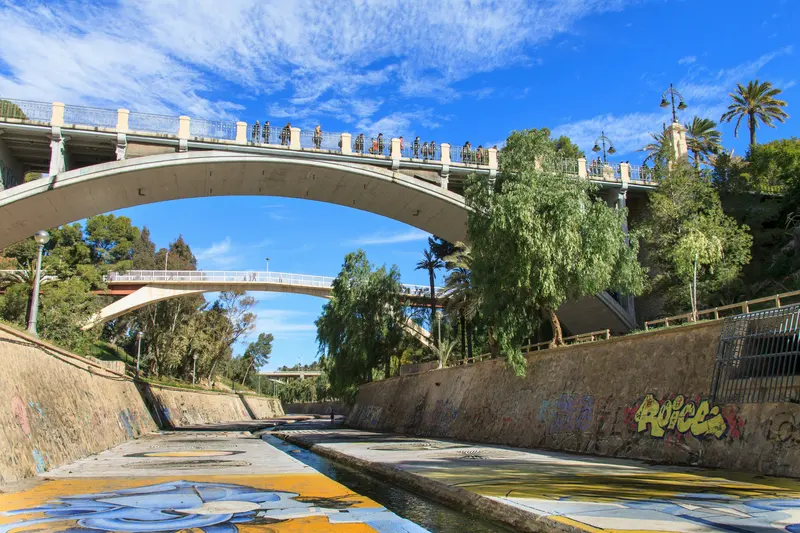
The basilica, palace and Glorieta square make a short walk. From the Municipal Park, start by looking at the palace from outside, continue towards the basilica and then go through to the square. You can loop back over the Vinalopó to look at the old town in relation to the banks of the river. On a short morning this sequence pairs well with one stretch of the Palm Grove Trail.

Monuments and heritage
The Palm Grove of Elche became a UNESCO World Heritage Site in 2000. The recognition concerns a farming landscape of Andalusi origin and the continuity of its layout and water supply. Look at the shape of the plots as well as the trees. Where the water channels are easy to pick out, it becomes clear why the way water was managed is as significant to the site as its palms.
Santa María basilica is where the Mystery Play is performed. The building is part of the staging: songs and suspended mechanisms link the floor of the church with the space high in the dome. Look up when you visit the basilica outside performances. Nearby are the Calaforra tower, associated with the old defences, and Altamira Palace on the edge of the historic enclosure by the river.
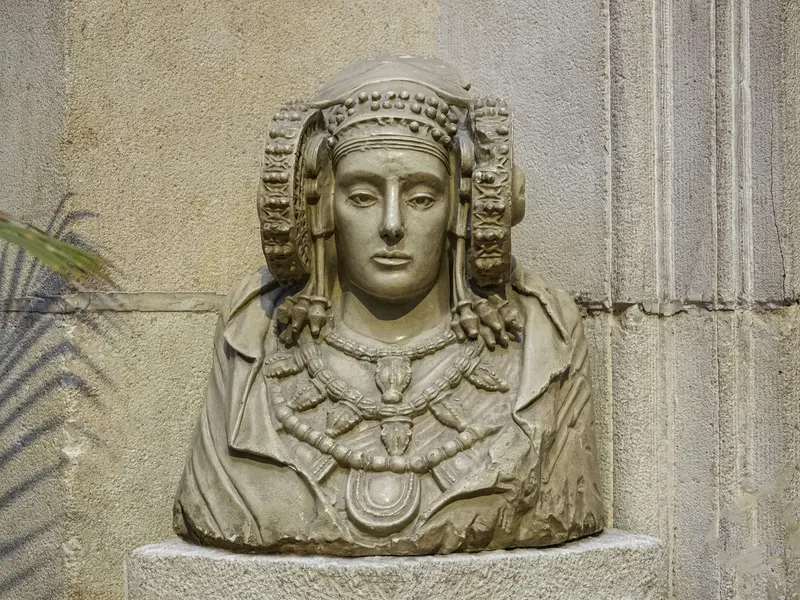
At l’Alcúdia, south of the centre, you can see evidence of settlement over several periods. This is where the Lady of Elche was found. The original is in Spain’s National Archaeological Museum in Madrid. The value of a visit here is to understand the place where she was discovered and the layers of occupation around it. Plan it as a separate stop and compare the site plan with the timeline at the archaeology museum in town.
Museums and culture
MAHE and the Palm Grove Museum
Elche’s Archaeology and History Museum, or MAHE, is part of the complex around Altamira Palace. The displays help order the area’s history if you are planning to visit l’Alcúdia. Allow time to read about a few finds in context. If you can see just one museum, choose by subject. The MAHE is useful for the long archaeological picture. The Palm Grove Museum focuses on the landscape you can walk through after the visit.
The Palm Grove Museum stands beside the Huerto de San Plácido. Move from its indoor displays to the plot to see how palms grow with other crops and how water was shared. On the trail afterwards, you can look for the boundaries and rows in different settings. A short museum visit can make these quieter details easier to spot than they are on a first walk.
Puçol and the Mystery Play outside August
The School Museum of Puçol’s educational project is on UNESCO’s Register of Good Safeguarding Practices. It grew from pupils taking part in recording local customs and ways of working. Its collections take you away from the monuments of the centre and into the life of the Camp d’Elx. Give the visit its own travel allowance and contact the museum about availability if it is the purpose of the outing.
The Museu de la Festa in the old town introduces the Mystery Play at other times of year. Pair it with the basilica to see where the performance is staged. If you are visiting during the celebrations, it helps to know how the story is divided between the two days and that it is sung in Valencian. That context can be useful to a visitor who arrives with little knowledge of the language.
Neighbourhoods and areas
The Vila Murada is centred on Santa María, Altamira and the Calaforra. It is a good part of town for interrupting a walk to spend time indoors and then returning to the same route. To the south, El Raval opens out into neighbourhood squares with a different feel. Come back from El Raval by the river or through the streets towards the Glorieta, depending on how much of your time you want to spend in the centre.
The Vinalopó is useful for telling central addresses from those farther west. From Carrús, choose the bridge that works best for the place you want to start. East of the old town, the route to the Huerto del Cura follows streets that occasionally open up between palm orchards. This is where you can see the change from groves beside major monuments to groves beside everyday streets and buildings.
Nature and protected areas
El Hondo Natural Park, shared by Elche and Crevillent, protects reservoirs, channels and wetland habitats. The relationship between water management and birdlife gives the park its character. Bring binoculars if you want to see beyond the edge of the path. Check the visitor centre information and authorised routes before choosing an entrance. Different walks offer different views over the water, and access can shape the visit as much as the season does.
At the coast, use a boardwalk to see the Carabassí dunes and the succession of vegetation towards the beach. The walk there feels quite different from time spent looking over the reed beds at El Hondo. If birdwatching is the priority, allocate the best light to the inland wetland. For a day of beach and shoreline walking, keep the dunes and nearby sea together as a separate outing.
Beaches in Elche
Arenales del Sol, El Altet and Carabassí
Arenales del Sol has a coastal settlement next to a long beach. It suits a longer day beside the water with a walk close by. El Altet is a different point on the coast farther north. Choose an exact entrance when meeting someone or looking up a transfer. The name of the settlement and the place you want to reach on the sand may produce different routes.
Carabassí has access by boardwalks across the dune landscape. Allow for the walk from your arrival point to the sand, especially if you bring beach gear. Stay within the designated access, where you can still see the vegetation that holds the dunes in place. Families can weigh the length of that approach against the simpler route onto a more built-up beach.
La Marina and El Pinet
South of the main cluster of beaches, La Marina and El Pinet belong to another part of the coast, towards the salt pans. The landscape here includes dunes and pine trees. Choose where to turn off according to which part of the shore you want to visit. The inland settlement of La Marina is a different reference from the beach entrance. From the centre of Elche, set aside a distinct part of the day for getting out and back.
Festivals and traditions
The Misteri d’Elx is a sacred drama sung in Valencian and based on the death and assumption of Mary. During the August 2026 celebrations, La Vespra took place on the 14th and La Festa on the 15th. Nit de l’Albà fell on the night of the 13th. Look up the council programme for the year of your visit to distinguish performances, rehearsals and fireworks. A performance in Santa María and a regular visit to the church are different ways of experiencing the same building.
Palm Sunday draws on a different part of local heritage: white palm fronds, including intricately woven examples. Look for the difference between straight and braided palms if you see the procession. Its calendar date changes from year to year. At other times, visits to the orchard and cultural collections offer a chance to learn how palms are grown and worked by hand.
Routes and itineraries
One day in the centre and the groves
Come through the Municipal Park to Altamira Palace and Santa María. Choose the archaeology museum for your first interior visit or go on towards San Plácido if the orchards are your focus. In the afternoon, continue to the Huerto del Cura and return to the centre past the Glorieta. End at one of the bridges if you want to see the river channel from above after the rest of the walk.
Two days with archaeology or the coast
Use the second day for l’Alcúdia and possibly Puçol if you have planned transport between them. They cover very different forms of heritage, from the archaeology of former settlements to the skills and occupations documented in the school museum. If the weather and your plans favour the beach, spend the day between Arenales and Carabassí instead. Give El Hondo its own slot if you are keen to use the time and your binoculars on a longer walk.
Day trips
Santa Pola and the salt pans
Santa Pola offers a harbour walk and the wetland of the salt pans. Look up the information centre and starting point of the walk to work out which one to see first. If you add a boat to Tabarca from Santa Pola, let the crossing and the return determine the rest of the day. The amount of time you have on land depends on the sailing you choose.
Alicante and Mount Benacantil
Santa Bárbara Castle in Alicante occupies a very different site from Altamira Palace. Combine the fortress with the lower old town and the Explanada for the contrast between the hillside and the waterfront. The MARQ makes an interesting link to the archaeology of Elche if you have another half-day. When time is limited, choose between the museum and a longer castle visit.
Where to stay in Elche
Stay near the Glorieta, Santa María or the Municipal Park for a visit centred on heritage and walking. The streets around Huerto del Cura are convenient if you want to start in the eastern palm groves and go into town later. If you will be arriving or leaving by train, check which station is on the ticket and which bridges are useful. A location close to a particular museum can be much less convenient for rail travel.
For a beach holiday, look at Arenales del Sol or one of the other coastal areas and plan a separate trip into the centre. Torrellano makes sense for some early or late flights if you have already arranged the airport leg. In the city itself, choose the old town if you intend to alternate the museums and orchards with festival activities and want to return to your accommodation during the day.
See places to stay in Elche (opens in a new tab)Affiliate link: if you book through it, we may earn a commission at no extra cost to you.