

 Español
 English

Why visit Haro
There are two sides to a first visit to Haro. The railway district has wineries that grew up around the movement of wine by train. In the upper part of town, Plaza de la Paz and the streets around Santo Tomás take you through a much older centre. The Tirón river lies between them. The distance looks short on a map, but the climb back makes the walk between places feel quite different from a stroll past cellars and winery courtyards.
Haro is a good place to base yourself in La Rioja if you want to see how Rioja wine came to be produced on a large scale. A winery visit takes you into working spaces and barrel cellars. From the street, compare the layout of neighbouring properties and see how they relate to the station. Up in the centre, churches, palaces and fragments of the defences tell the story of a town that already existed long before the railway.
With a day in Haro, arrange one winery visit and leave the rest of the time for the old town. A second day brings a choice between the cliffs at Bilibio and the villages on the slopes of the Ebro valley. At Bilibio you can see how the river narrows between the hills. Around Briones and the Sonsierra there are stretches of vineyard and old settlements with their own short walks.
When to go
Spring and early autumn suit a visit split between the town, wineries and countryside. In spring, use the clearer half of the day for Bilibio. If you come in autumn for the harvest landscape, allow time to be outside as well as in a cellar. Harvest dates vary, and each winery sets its own programme of public visits.
Start countryside walks early in summer. There is less shade around the larger wine estates and on exposed stretches of the approach to the cliffs. A cellar visit, a museum or the basilica fits the hottest part of the day. If you are coming for the June festivities, you can either go to Bilibio on the busiest day or make a quieter outing there at another time.
The old town works as a winter visit, especially if you combine it with a museum or a cellar. If there is mist in the valley, save the views for a clearer spell. The town walk from the square to Santo Tomás and back past the gardens at La Vega still works on a grey day. That makes Haro a useful base for alternating indoor visits and short walks without relying on a full day of good weather.
Getting there and around
Haro sits near the AP-68 and the N-124. The municipal visitor guide lists approaches from the Ebro corridor and from the north. If you are driving straight to a winery, use the exact address on your booking. Haro’s wineries are spread across several areas, so a reservation with Haro in the address may take you somewhere other than the station district.
The railway station is in the lower part of town, near the wineries, with the old town across the Tirón. Check the return connection before booking a visit and see how far it is from your arrival point to the winery or your accommodation. If you are coming by coach, look up the exact arrival stop before deciding where to start your day.
To walk between the two areas, go down to the Tirón bridge and continue towards Avenida de Vizcaya. The paths along the winery district are straightforward once you get there. Coming back, the ascent from the river to the centre is the part to allow more time for, especially if you are carrying luggage. Treat Bilibio and the Ebro villages as separate outings from the town walk.
What to see in Haro
Barrio de la Estación
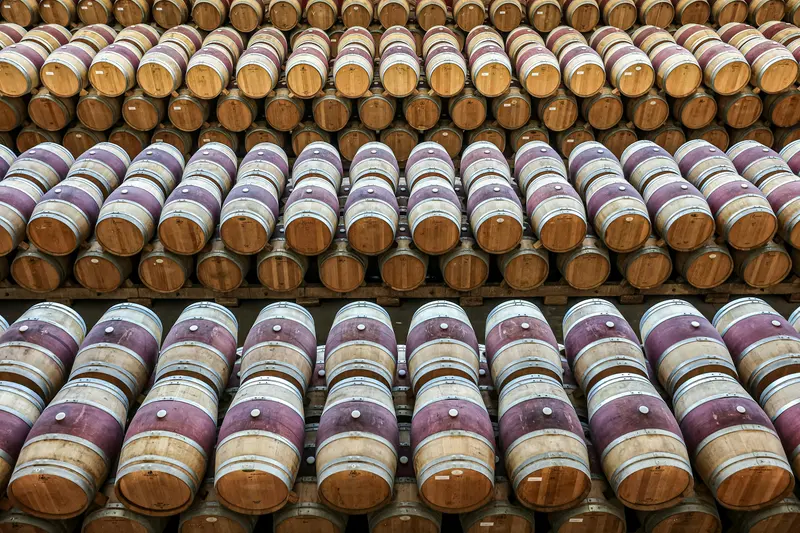
Begin near the platforms if you want to see why the big wineries chose to build here. Put CVNE, Bodegas Bilbaínas, Gómez Cruzado, La Rioja Alta, Muga, López de Heredia and Roda on the map. They make convenient landmarks on a walk around the district. Each house has its own arrangements for visits and some entrances can be quite different from the address that first appears on a map.
Look at how the yards, walls and buildings are laid out in relation to the railway. Inside, you might get a view of underground ageing cellars, or spend more of the visit looking at production buildings and how they have changed. Choose a visit that suits what you came to learn. On a short morning, walking around the district before or after one booking gives you more time to look at the buildings than trying to fit in several set arrival times.
Plaza de la Paz and La Herradura
In Plaza de la Paz, compare the town hall and Bendaña Palace from the open square before setting off towards the San Bernardo arch. Then follow Calle Santo Tomás uphill to the church. The streets of La Herradura are much closer together than those of the winery district, and you can make a circuit by returning on a different side of the old town.
Look for the Palace of the Counts of Haro near Santo Tomás. In the narrower streets it takes a moment to see the upper parts of the buildings, so stop in a wider spot when you can. Go back through the Torreón area to see a remnant of the town’s defences. If you walked up from the station, you can do all of this as a single walk on the upper side of the river.
From La Vega to Bilibio
The Basilica of Nuestra Señora de la Vega sits beyond the closest streets of the old town. Its gardens offer space to pause, either before you walk up to the old centre or after you have visited Santo Tomás. For the open countryside, set aside time for the Bilibio cliffs. The hermitage of San Felices marks the high part of the site. From here the shape of the Conchas de Haro, a narrowing of the Ebro valley, becomes much easier to read.
Monuments and heritage
Churches and palaces
The church of Santo Tomás stands at the top of an ascent from Plaza de la Paz. Find a point in front of the church where you can see both the whole portal and its carved figures, then step nearer to look at the details. On the way back, compare the façades of the Palace of the Counts of Haro and Bendaña Palace with the church. You can see the differences between their decoration on a short walk through public streets.
The Basilica of La Vega has a Baroque high altarpiece, which makes an interesting comparison with the buildings in the upper town. Look back from the gardens to see how the basilica sits in the wider space of this neighbourhood. It is a different approach from the one to Santo Tomás, where the church appears as you come through a narrower network of streets.
The old defences and a Camino link
The San Bernardo arch and the Torreón are useful points for tracing the old centre. Before going inside the tower, look at it from the square. The proximity of the arch, the tower and later buildings gives you an idea of how much the centre changed while preserving a few pieces of its earlier outline.
Haro also lay on a connection between historic pilgrimage routes. The Camino Riojano linked the northern inland route to the French Way, passing through Haro and Zarratón. The protection decree identifies the Ebro and Tirón crossings as part of this route. That gives the bridges another context when you visit a town whose modern identity is so closely associated with the railway.
Museums and culture
The Torreón houses a museum of contemporary art. Its scale makes it easy to pair with the square and the surrounding streets. Outside, look at the tower from near the arch. Inside, the change in the building’s purpose is more apparent, as former defensive walls surround modern works.
Haro’s open-air museum places sculptures around the town. Some represent trades and others commemorate festivities. There is a group of figures depicting the Wine Battle in the winery district. Use the municipal map to select ones that are already on your walking route. The Estación Enológica, or wine research station, adds another element to the story, showing how institutions grew up alongside the producers as the industry expanded.
Neighbourhoods and areas
Plaza de la Paz and La Herradura anchor the historic walk. Start in the square, find the Torreón, and climb to Santo Tomás. The easiest way to get your bearings is to treat the square as a place to come back to while working through the lanes higher up. From there you can see the buildings as a whole, while in the side streets you often get just one detail of a doorway, wall or eaves.
The Barrio de la Estación revolves around the railway and Avenida de Vizcaya. Old wineries are separated by yards, walls and working entrances. Use the entrance in your booking to navigate that part of town. On the way down from the centre, look back at the Tirón crossing to see how much of the climb you will need to make on the return.
La Vega has a gentler rhythm around the basilica and its gardens. It works for a brief walk before checking in or leaving town. If you plan to see the basilica, the historic centre and the winery district on the same day, place La Vega before or after the upper town instead of making several trips up from the station.
Nature and protected areas
The Bilibio cliffs are worth visiting for the position of the hermitage above the rock face and the loop of the river below. Look along the valley to see how the hills pinch the course of the Ebro. On a clear day you can read the change in the land beyond the cliffs much better than on a misty morning. The official Ebro Nature Trail map places the site on the stage from Miranda de Ebro to Haro.
The Tirón is part of the town visit. Include the bridge and its immediate surroundings with the walk from the wineries to the old town. Allow a separate outing for the cliffs, choosing your approach and the amount of walking you want to do. Putting both locations on a map helps if you have only one clear spell in which to see the countryside.
Festivals and traditions
Haro’s Wine Battle takes place around San Felices at Bilibio. The town council scheduled the 2026 edition for 29 June, St Peter’s Day. The programme placed a service at the hermitage before the battle and festivities back in the centre afterwards. It helps to think of the event as both a pilgrimage outing and a town festival, with the two parts in different places.
The June programme also marks San Juan and San Felices. In September, festivities are linked to Our Lady of La Vega. Check the programme for the year of your visit to see whether a particular event is at the basilica, in the square or outside town. If you are in Haro at another time of year, you can connect the Wine Battle with the hermitage and the sculptures in the winery district.
Sport and outdoor activities
The Oja–Tirón Green Route connects Haro with Casalarreina over 12 km, according to the regional government. Pick a stretch and return the same way for a shorter walk or ride. If you want to continue south on the Oja Greenway, check the route alerts before planning a one-way trip. In November 2026 the regional page still carried a landslip notice for the Ojacastro section, first published in May 2025.
The Ebro Nature Trail gives you another way out of Haro. Towards Briones and San Vicente, it goes from the town into a landscape of vineyards and open slopes. Use the map to choose how far you will go and where you can turn around. If you are short of time, the gardens of La Vega and the old town make a much simpler circuit.
Routes and itineraries
One day, from the station to the old town
Start in the Barrio de la Estación. If you have a booking, spend some time outside first to find the entrance and see how the property sits beside the railway. Then cross the Tirón, climb to Plaza de la Paz and explore Santo Tomás and La Herradura. End at the Torreón or the Basilica of La Vega, depending on where you want to be in the afternoon. You make the main climb only once and spend most of the day walking between nearby sights.
Two days, with countryside or another historic town
Spend the second morning at Bilibio if you want the Ebro views. You can return for the gardens at La Vega or the Torreón in the afternoon. If you would rather see another historic place, spend the day in Briones or San Vicente. In either case, take a little time to view the settlement from the outside. The slope explains why different streets and buildings sit at different heights when you walk through the centre.
Day trips
For an outing in the wine country, visit Briones and San Vicente de la Sonsierra. In Briones, walk through the square and look for the church of Nuestra Señora de la Asunción. In San Vicente, the castle enclosure overlooks the river. Both feature on the Ebro Nature Trail, which helps you see how they sit on different sides of the valley even if you travel by road.
Santo Domingo de la Calzada gives you a different view of the Camino’s history. The cathedral, the former pilgrim hospital and Calle Mayor are easy to visit together. Allow a full morning if you want time inside the cathedral as well as for the separate tower.
In Logroño, combine museums with a riverside walk. Start at the market square and follow the urban Camino towards the Revellín gate. If you can see a cellar under the old town, compare the scale and layout with the properties next to Haro’s railway station.
Travelling with children
Start at the outdoor sculptures and the San Bernardo arch. Let children find figures that show people at work or at a celebration and connect them with the part of town they are in. If you are adding a winery visit, check which parts suit the ages in your group. Leave a pause in the gardens at La Vega between visits that need a fixed start time.
Where to stay in Haro
Look around Plaza de la Paz if you want to step straight into the old town. The Torreón and Santo Tomás are close, while the return from the wineries involves a climb from the Tirón. Check the exact address, particularly if you have luggage or your accommodation is on a narrower street.
Around La Vega, you will be close to the basilica and its gardens as well as within walking distance of the historic centre. If you depend on the train, compare the distance to the Barrio de la Estación with the slope between the station and your accommodation. For several days of trips towards Bilibio or the nearby villages, think about where you will be starting and ending each day as well as how easily you can walk into town.
Find accommodation in Haro (opens in a new tab)Affiliate link: if you book through it, we may earn a commission at no extra cost to you.