Español
 English

Why visit Valladolid province
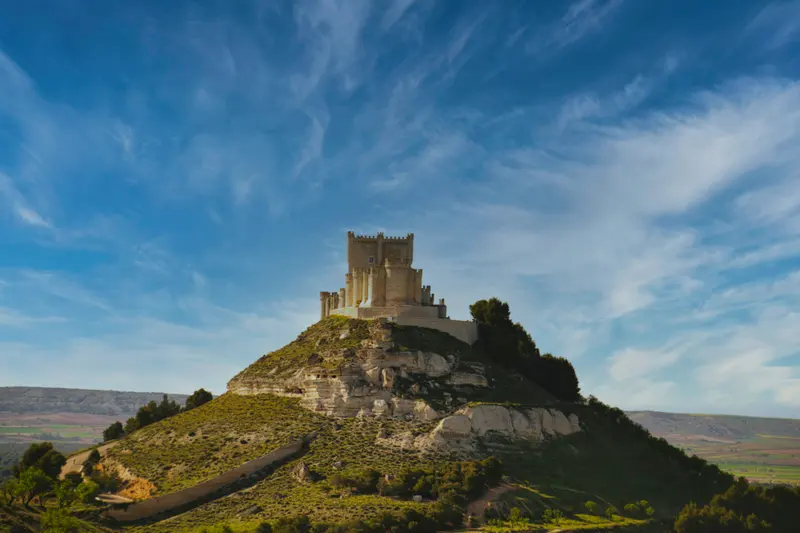
When choosing things to do in Valladolid province, mark three places on the map. To the east, vineyards flank the Duero beneath Peñafiel’s long hilltop castle. North-west of the capital, the Canal de Castilla reaches Medina de Rioseco through flat cereal fields. In the south, the brick of La Mota Castle and the churches of Olmedo gives a different kind of trip, centred on fortifications, market squares and Mudéjar architecture.
In this part of Castile and León, you can spend one morning with the collections at the National Sculpture Museum and another day out of town. If you would rather walk or cycle, the towpaths and riverbanks require less scheduling than a circuit of timed interiors. For a wine trip, choose what you want to see: underground cellars, a guided tasting or a walk among the vines. Each focus leads to different places and different arrangements for getting back.
The capital makes a self-contained visit on foot. Travel beyond it to see how the region moved goods along canals and defended crossings from hilltop castles. Give yourself time for the surroundings as well as the main attraction. The descent to the Duero in Tordesillas and the view from the walls of Urueña explain where those settlements grew and why their layout matters.
When to go
Spring and early autumn
In spring, a clear morning can combine an old town visit and a long walk beside the canal. Give yourself time to stop in Tierra de Campos and see how the villages sit within the fields. Cloud can flatten the view across the plain at midday and break later in the afternoon. If the views are your reason for visiting Urueña, a bookshop or museum is a useful stop before going up to the wall when the light improves.
Early autumn puts the rows of vines at the centre of trips around Peñafiel and Rueda. Ask what will be available on the date of your winery visit if staff are handling the harvest. A tasting, a vineyard walk and a museum tour take different amounts of time. Choose the best match for your interests and leave the rest of the morning open. The same flexibility is useful for taking pictures around the vines before sunset.
Heat, frost and daylight
In summer, go to castles and exposed paths early. A museum in Valladolid, a long lunch or a cellar visit fits the hottest part of the day. In small towns it can take a while to find a shaded place to sit. Plan a place to stop before you start a walk or set out with children on bicycles. Unshaded paths are hard to shorten once everyone has passed the halfway point of a circular route.
Expect frost and some fog in winter. A cold day can suit the sculpture museum or a castle interior better than an unlit minor road after sunset. Put outdoor visits in the middle of the day, when there is more light. A foggy valley and the higher ground above it can feel like two separate forecasts. Check conditions for the place you intend to visit, particularly if the day hinges on watching birds or seeing a distant view.
Getting there and around
Rail gateways and onward trips
From Madrid, Valladolid Campo Grande is a practical starting point for a trip by train. Allow time to find the hotel or leave your luggage before booking admission. The station is close to Campo Grande park, which gives you a first walk into town if you have only an afternoon. When arriving by air, work out the transfer from the airport terminal to the correct railway station in Madrid before buying a fixed departure.
Renfe’s route information consulted in 2026 listed connections between Madrid and Medina del Campo. Search by the full station name and account for the journey up to La Mota. For a trip from Valladolid, check local trains and return services before arranging a timed visit. If you intend to change bases, check how far you will have to carry your luggage before you can leave it at the next property.
Driving by district
With a car, organise a day around Peñafiel and the Duero valley, a second around Medina de Rioseco and Urueña, or a southern trip through Olmedo and Medina del Campo. Crossing between these districts several times in one day adds mileage between the visits themselves. If you plan to taste wine, arrange a driver or transfer first, or choose somewhere you can reach on foot.
For rural sites, save the exact entrance rather than relying on the village name. Parking sometimes sits apart from the place you intend to visit. Estates and vineyards can also be reached from different branches of the same road. At walled towns, leave time to park outside and walk up. If someone in your group has limited mobility, ask about the gradient and whether there is a suitable drop-off point before setting out.
What to see in Valladolid province
Peñafiel and the surrounding hillsides
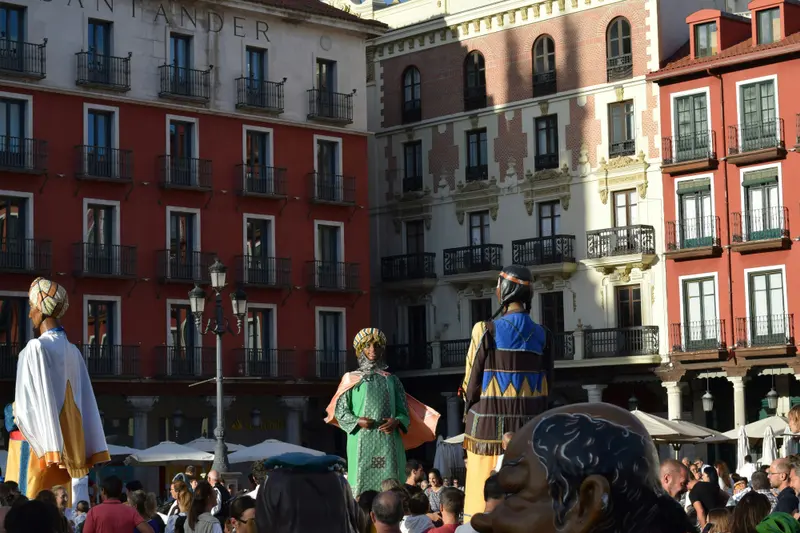
Look at Peñafiel Castle from the town before climbing the hill. The fortress follows the long, narrow ridge, so it looks quite different depending on your approach. The Provincial Wine Museum occupies part of the building and provides some context for the area before you go to a working winery. Down in the town, take time to find the Coso, an earth-floored square enclosed by houses with balconies.
To spend the whole day in Ribera del Duero, reserve a single winery visit and leave enough time to get there from the castle. If you already have a tasting planned elsewhere, walk in Peñafiel and study how the Duero and Duratón valleys converge. Near the same stretch of countryside, Curiel de Duero offers another perspective on the way the hilltops were fortified. Plan a short walk there if you want to look back towards Peñafiel.
The canal basin at Medina de Rioseco
Begin where the branch of the Canal de Castilla widens at the edge of Medina de Rioseco. Find the quay and former working areas to see why this end of the canal was useful for loading and unloading. Then walk beside the water as far as you like. A simple out-and-back route works if you are visiting outside cruise times or if a tour of an interior does not fit.
In the centre, walk along the arcades of Calle Mayor and the streets near Santa María. The distance between the old streets and the basin explains how the town combined trade and worship with infrastructure that moved agricultural goods onward. On a short visit, see the basin and use the arcades for a circuit of the old town. With more time, add a walk along the canal and come back to the centre for lunch.
Valladolid and the Pisuerga
On a first visit to the capital, link Campo Grande, Plaza Mayor and the streets around the National Sculpture Museum. Leave the museum as the longest stop if you want to look at painted wood sculpture. From there a walk to the Pisuerga offers a change from the streets and arcades. Return to the centre on foot and save the rural driving for a later day.
If your itinerary mainly consists of villages, a city morning provides time for one substantial indoor visit and a simpler start before you move to a rural base. Pick the sculpture collection if your plans include Holy Week and you want to look closely at how the figures were made. With children, Campo Grande offers a place to pause after museum rooms. This usually works better than adding another collection to the end of the visit.
Monuments and heritage
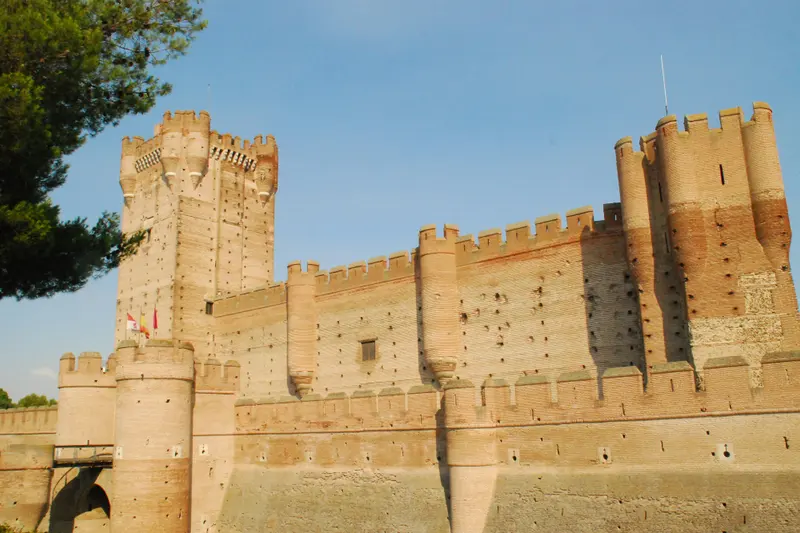
In Medina del Campo, start with La Mota Castle. A walk around the outside puts the scale of its brickwork and ditches in context before an interior visit. Check which spaces your ticket covers if there is a particular feature you want to see. In town, Plaza Mayor de la Hispanidad shows its commercial history. Walk the perimeter and note the difference between this market space and the hilltop military site.
In Tordesillas, locate the Treaty Houses above the river and look back at the town from the bridge or from nearby. The Royal Monastery of Santa Clara combines features of the former palace and of the later religious buildings. It is a good priority if you plan one indoor visit. After it, leave time to walk towards the river to see how the streets meet the slope. The connection between the river and buildings takes more time to appreciate than the short distances on a map suggest.
The castle in Simancas houses the General Archive. Check what visitors can see, since access to a working archive and access to a public exhibition operate differently. From outside, walk down towards the Pisuerga to see why the castle occupies the high ground there. Simancas works as a short trip from Valladolid or as one stop in a day that continues towards Tordesillas.
In Olmedo, look for brickwork in wall surfaces, arches and towers before going to the town’s Mudéjar park. The models give an overall view that is hard to see when looking up at an actual building in a narrow street. Follow with a visit to one of the sites in town. If you are also visiting Medina del Campo, looking at the different uses of brick gives the day a clear connection between churches and a fortress.
Museums and culture
The National Sculpture Museum is spread across several buildings. At the Colegio de San Gregorio, give yourself time for the façade and courtyard as well as the rooms. Check which building holds the collection you most want to see. On a short visit, allow time to look at painted surfaces, drapery and expressions from different angles. The colour effects are easier to see in a museum than across a crowded street during a procession.
In Peñafiel, the wine museum is useful for seeing tools, practices and the way the industry developed. At a working cellar you can concentrate on the choices made by one producer and ask how those choices change depending on the year. In Urueña, combine the bookshops with a collection anchored in local culture, such as the centre associated with Joaquín Díaz. Check openings before you set out and choose something that adds to the part of the village you most want to see.
Charming villages
In Urueña, take in the shape of the plain from the walls before entering the bookshops. The fortification makes the drop from the Montes Torozos into Tierra de Campos easy to see. The church of Nuestra Señora de la Anunciada lies below the walls. The downhill and uphill walks matter when allocating time. If some of your group would rather stay at the top, the lanes and shops are an outing of their own.
Nearby Tiedra offers open views and a fortification in another small settlement above the plain. Pair it with Urueña if understanding their position is the main goal. If you have a fixed visit at Medina de Rioseco, choose one of the two. Both make more sense when you give yourself time to get out of the car and look at the position from several angles.
Along the Duero, Curiel is interesting for the way it faces Peñafiel across the valley and for its size. In the opposite direction, Fresno el Viejo or Nava del Rey can make a stop in a journey around Rueda and Medina del Campo. Choose one because there is a particular walk, building or visit you want. The fact that two names are close on a map rarely makes both worth arranging on the same afternoon.
Nature and protected areas
The Riberas de Castronuño–Vega del Duero reserve protects a river landscape with reedbeds and the San José reservoir. Choose between a view from the high ground and a stretch closer to the water, according to how much time you have. Around Castronuño, wait long enough to see how birds use the different edges of the river. Binoculars are more useful than trying to get closer along an unmarked path.
The Canal de Castilla is a strip of water and trees in a landscape of open farmland. Follow it from the parallel path for a change from town walking. If the ground is soft, make it a short return trip. Bridges are spaced along the canal, so do not rely on switching banks wherever you feel like turning back. The wind also matters more in the open sections than a map of the flat terrain might suggest.
A walk by the Pisuerga in the capital is an easier alternative when the weather or transport rules out a full rural outing. Compare it with the position of the crossing and castle at Simancas on the same river, or with the reach of the Duero below Tordesillas. The river serves three different roles on these walks: part of the city, a route through defended ground and a habitat to observe quietly.
Festivals and traditions
The official regional Holy Week programme for 2026 covered 27 March to 5 April. Valladolid, Medina de Rioseco and Medina del Campo offer settings of different sizes. In the capital, sculptures in the museum help explain details you can look for in the processional figures. In Medina de Rioseco, the passages through narrow streets and arcades show why the route matters to the experience. Use the official schedule for your travel year to choose a main procession and check diversions before heading into town.
Harvest-related events in autumn offer a way to understand how the local vineyards work. Treat each activity separately. A walk in a town can sometimes be added at short notice, while a tasting or a visit to a producer can require advance booking. If your trip coincides with a village celebration, look for the starting point and the route on the local programme. Plan how you will get back after the event while you can still choose where to park.
What to eat
Roast suckling lamb, lechazo, is a natural choice after a visit to Peñafiel Castle. Ask how it is portioned if there are only one or two of you. For a second food stop, choose sheep’s milk cheese, cured meat or pulses to vary the meals. Small dishes in Valladolid give you a chance to try several things without planning every lunch around a roast.
In Ribera del Duero, look for reds. In Rueda, ask about the local Verdejo whites. Around Cigales, clarete and rosado introduce another part of the province’s wine history. Visit one wine district at a time if you want to see vineyards and production. For a comparison across districts, a tasting or a few glasses in the city leaves the car parked and reduces the amount of time spent driving.
In Medina de Rioseco and other Tierra de Campos towns, pause for lunch between the old streets and the towpath. In colder months, garlic soup or a dish of pulses suits a short afternoon walk. If you are used to earlier lunch in the UK or elsewhere, check when the kitchen opens. Leave a proper interval between a meal and a rural attraction with timed admission.
Sport and outdoor activities
Walking or cycling the canal
For a first bicycle outing, start at the basin in Medina de Rioseco and ride along the water. Fix a sensible turning point before you go. The effort on the way back will depend more on the headwind and the condition of the surface than on the gradient. With children, the basin and the first stretch can fill a morning if you leave time to stop and see where goods once came down to the water.
On foot, combine a riverside section with the climb into a historic town. You gain enough height to see the shape of the valley without committing to a long day. At Castronuño, use marked paths and established viewing points. If the forecast is very windy, the route from the city centre to the Pisuerga is simpler to shorten and gives you somewhere to go indoors.
Routes and itineraries
Two days in Valladolid and Peñafiel
Spend the first day in Valladolid, with the National Sculpture Museum as the main attraction and a route from Campo Grande to the centre. Start the second day below the castle in Peñafiel and walk around the lower town before you go uphill. If you book a winery, choose one afterwards and leave time for the transfer. A rail-based version replaces Peñafiel with Medina del Campo if the available times suit your plans.
Three days towards the canal and down the Duero
Explore Medina de Rioseco and the basin on day one. On day two, give Urueña the main part of the morning and decide whether you want to go down to the church outside the walls or stop in Tiedra. On the last day, visit Tordesillas and continue to Castronuño if you have enough daylight. If birds are the reason for the trip, make the reserve the first visit that day and leave the town for the journey back. Staying in the west avoids driving across the capital repeatedly.
Brick architecture and wine in the south
Go from Valladolid to Olmedo first to see how brick is used in the old streets. Continue to Medina del Campo for La Mota and, if time allows, the large market square. Add Rueda the next morning if you want a proper winery visit. With only one day available, decide which indoor visit and walk matter most, then try the wine over dinner at your base.
Travelling with children
At the Canal de Castilla, ask children to find where the water narrows and where there used to be room for boats to load. A short return walk gives them more control over the day than an outing with a fixed finishing time on the other side of a crossing. At Olmedo, pick a tower or an arch from the models and look for a similar shape in town. In Valladolid, pair a short museum visit and a break in Campo Grande if everyone needs a change of pace.
Where to stay in Valladolid province
Stay in the capital if you arrive by train, want to have dinner on foot or intend to spend a day on the collections. If you have a car and most of your sights are to the east, Peñafiel removes the last drive to the city. Ask where a winery is in relation to your hotel. Two addresses in the same municipality can still involve a long walk on roads with little space for pedestrians.
Medina de Rioseco is useful for the canal and north-western villages. Tordesillas gives a starting point for the Duero and a range of outings the following morning. Medina del Campo makes sense if your trip combines the castle with Olmedo or Rueda. When you pick a small base, find out where you can have dinner at the end of a day and how early you will be able to leave luggage before the first visit.
See places to stay in Valladolid province (opens in a new tab)Affiliate link: if you book through it, we may earn a commission at no extra cost to you.
Practical tips and common mistakes
Mark timed visits and flexible stops separately on a map. Let the timed visits decide the structure of the day. Use the others to move lunch or shorten a walk if the weather changes. Include the last stretch from the car park up to a castle or from the station to the town. On a short break this can take a noticeable part of the time you had set aside for looking around.
Carry water, shoes with grip and a layer for windy paths on the plateau or beside the canal. Keep a nearby indoor visit in mind for foggy days when a viewpoint offers little. Ask about surfaces and gradients if anyone in your group needs an accessible route. A sheltered arcade can make a pleasant walk but may be reached via a steep approach.
Book what you most want to see first, such as an interior at La Mota, a winery tour or Santa Clara. Build the rest around a square, a meal or a river walk you can move as needed. You will still have a day if a drive takes longer than planned or the group decides to stay at the first attraction. This flexibility matters when you start and finish the day in different parts of the province.