Español
 English

Why visit Segovia province
When planning things to do in Segovia province, think in terms of three landscapes. The city stands on a ridge between the Eresma and Clamores valleys. To the south, the royal palaces of La Granja and Riofrío sit among woods and the lower slopes of the Guadarrama. To the north-east are the tablelands, gorges and walled villages. The pine country west of the city has a castle circuit of its own. A weekend gives you time for two of these settings if you leave enough of each day to explore on foot.
In this part of Castile and León, the Roman arches above a town square and the trees on the bank of a mountain river can be part of one trip. Give a city morning enough time to see a building from inside and then from the valley. In the countryside, start by deciding whether you want a view into a canyon or a walk along its floor. Those plans make different demands on the drive, the light and the time of your return.
If you are coming from Madrid, the city and La Granja make a manageable first outing. Birdwatching, village Romanesque churches and brick castles reward a base further afield. Sleep near Sepúlveda, Ayllón or Cuéllar if that is what you have come for, and keep the aqueduct for a stop on the way through.
When to go
Spring gardens and village walks
A spring weekend can combine a walk by the Eresma with the squares of Pedraza or Sepúlveda. On a cold day, save the riverside for midday and use the first part of the morning for a palace or church. Wet stone slows you down on the steps of a historic centre and on paths up to viewpoints. In Valsaín, expect a cooler outing than on the open plain below even if central Segovia is warm enough for an outdoor lunch.
If your trip to La Granja is primarily for the fountains, check Patrimonio Nacional’s calendar for your year. The avenues, sightlines and sculpture are visible on a normal garden walk. Seeing particular groups of fountains in operation is a separate plan and depends on the published programme. Decide which parts of the grounds you can comfortably reach in the time you have.
Summer, autumn and winter
In summer the pine forest at Valsaín and the wooded riverbanks provide shade. Put exposed castle approaches, squares and viewpoints earlier in the day or towards evening. Take water from the village before you set out for a gorge. Consider how much of the return will be exposed to the sun if the walk takes longer than planned.
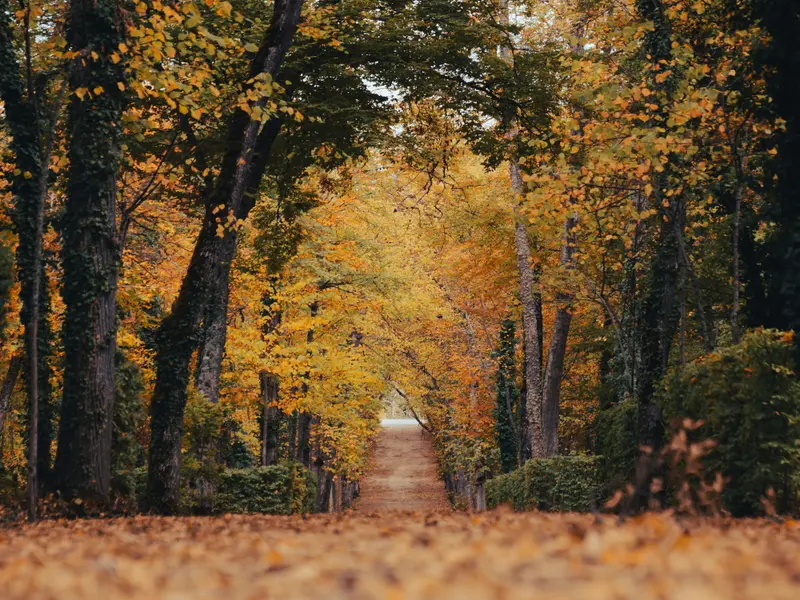
Autumn brings colour beside the Riaza and Eresma, where a short route can be as rewarding as a long one. In winter, use the middle of the day for panoramas and keep an interior for later. Segovia’s old town and the Royal Glass Factory make a useful wet-weather combination. For a mountain day, look at road conditions and walking conditions separately. A surfaced road can be clear while a shaded path remains icy.
Getting there and around
Madrid to the city centre
Renfe’s 2026 route information put fast trains from Madrid at Chamartín, arriving at Segovia Guiomar. Guiomar sits outside the historic centre. Allow separately for the transfer to the aqueduct and for the one back to the station if you are making a day trip. If you land in Madrid and continue by rail, include the time to reach Chamartín before settling on the onward departure. Buy the journey you can reach comfortably rather than the first departure shown after landing.
In town, choose whether to start around the Azoguejo or above it according to where you arrive. Slopes and irregular paving make the map distance a rough guide. A walk to the Alcázar and down to the valley calls for a climb back unless you finish somewhere with onward transport. Drop your bags before doing the whole old town circuit if you are spending the night.
Getting out into the province
You can build a car-free excursion around one town when the outward and return services line up. Check where the stop is relative to your visit. With a car, Pedraza and Sepúlveda combine well for a day of architecture. For the Duratón, select the exact park approach first. The start of a valley trail and a viewpoint high above it can lie a substantial drive apart. Put the name of the parking area or trailhead into your map, rather than the name of the river.
A car makes the run between Coca and Cuéllar practical without returning to the capital between castles. For several outings around Ayllón, Maderuelo and Riaza, find a base in the north-east. Ask about access for luggage before arriving in a walled town. Once you are there, leave the vehicle outside the small set of streets you intend to walk.
What to see in Segovia province
The city at street and valley level
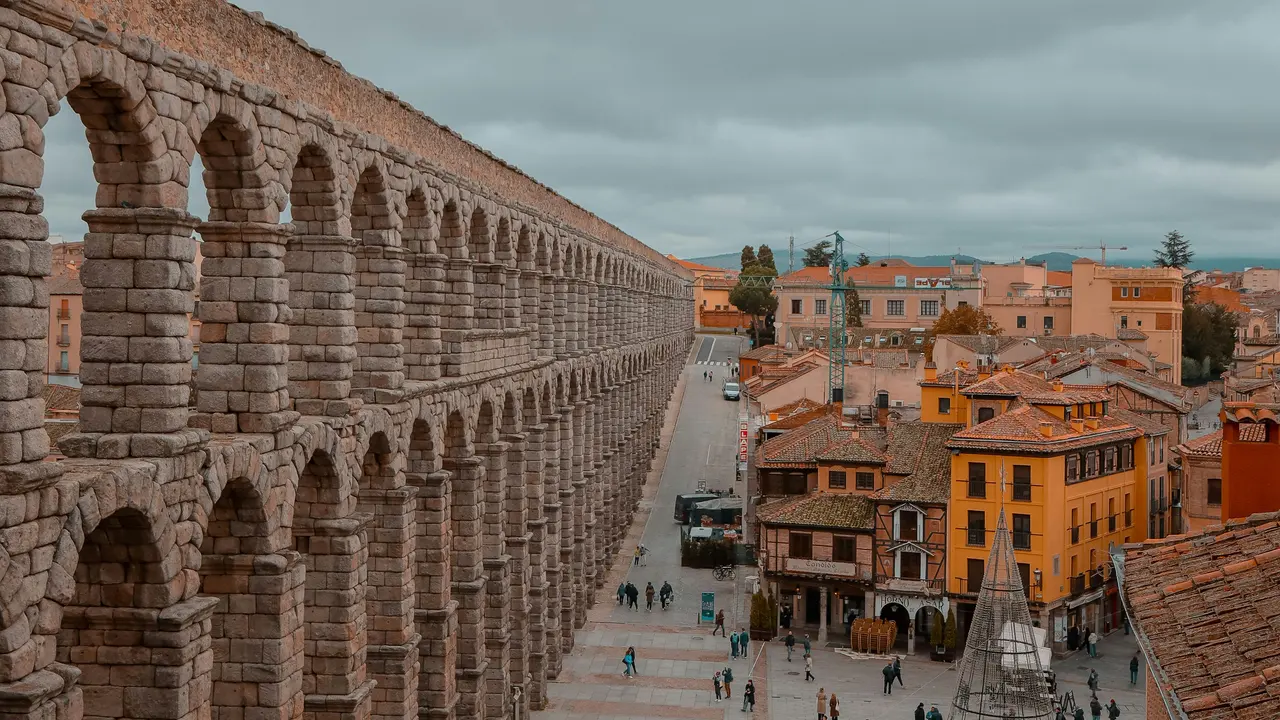
Start beneath the Roman aqueduct in the Azoguejo. Follow its arches as they rise towards the square, then look for where the alignment meets the higher part of town. Continue to Plaza Mayor and the cathedral, then finish at the Alcázar. The walk links a Roman water supply, a civic centre and the tip of a defensive ridge. The aqueduct and old town form the World Heritage site together. Seeing the approach on foot gives you a better sense of that connection than a sequence of separate admissions.
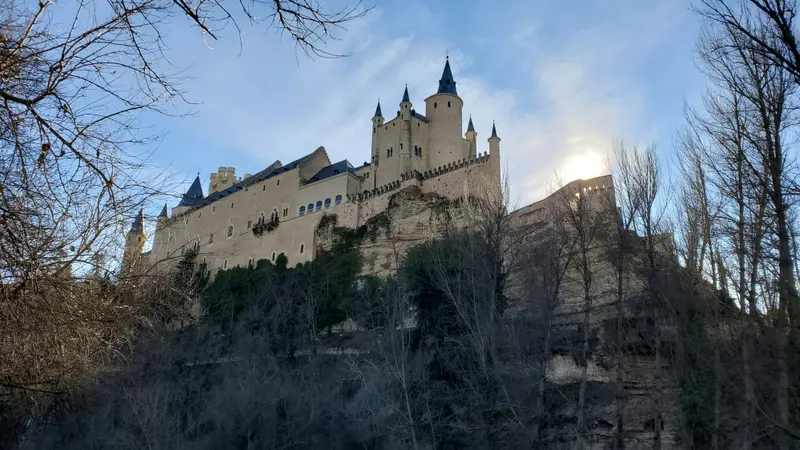
For a view of the city walls and the rock beneath them, descend towards Pradera de San Marcos. The Alcázar rises above the valley and the church of Vera Cruz is nearby on this side of town. Keep the castle interior for the start of the day if you are spending the afternoon below the walls. If you only have a few hours, choose one valley perspective and work out which way you want to climb back.
La Granja and Valsaín
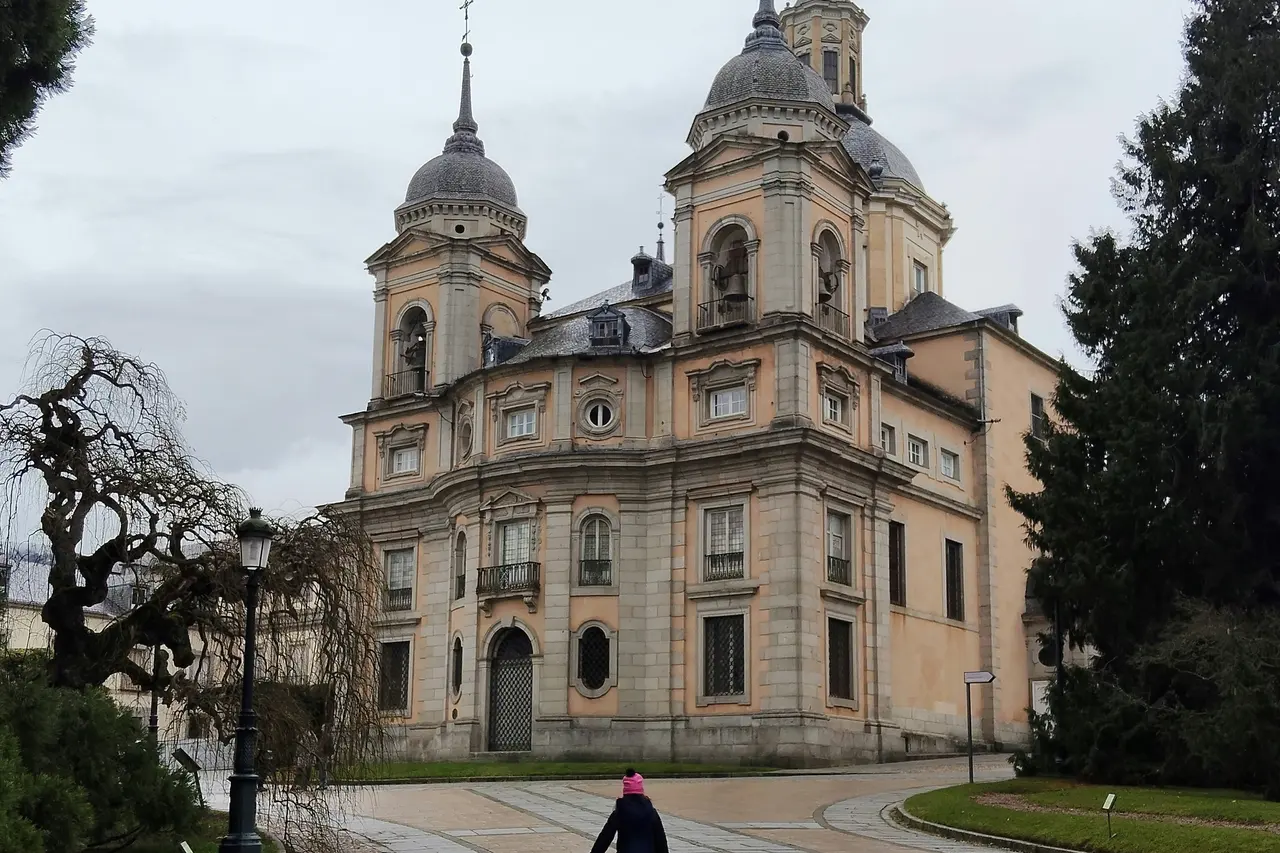
At the Royal Site of San Ildefonso, start with the main garden axes near the palace. They give you the plan before you choose a longer walk between the fountains, terraces and paths on the slope. Count the walk back from the last point you want to see. One short garden circuit and an interior visit make a reasonable half day. In good weather you can stay outside longer and save another building for another trip.
At Valsaín, leave the formal garden for the Eresma and its pinewoods. The Royal Fisheries route makes sense when you notice the stretches of river adapted for court use. Around Boca del Asno, pick a short walk that is easy to turn back from if the weather changes. A path that feels straightforward on the first stretch can still take much of the morning if you follow the river for a long way.
The Duratón and the pine country
At Sepúlveda, split the visit between the town on the slope, its square and the church of El Salvador, then the park approach you have chosen. The landscape opens out once you reach the Duratón gorges. For a first visit, one viewpoint or a path with an obvious turning point leaves enough time for lunch and a walk back through the town.
At Coca, the brickwork and moat shape your first view of the castle. In Cuéllar, look at how the castle joins up with the town walls and the churches below it. Compare the places the two fortresses occupy before deciding which interiors to book. One visit inside and a walk around the other place give you more flexibility than two fixed times on the same day. That also leaves time to see the town where you plan to eat.
Monuments and heritage
Brick castles and royal building
Look at how the approaches to the castles were laid out. In Coca, brick produces patterns and shapes you can see from the edge of the moat. In Cuéllar, the walls starting from the castle give you a line to follow into town. If mudéjar building interests you, make time for San Andrés in Cuéllar, where the brickwork and arches of the apse are visible from outside. Looking at the smaller building helps you recognise details at castle scale.
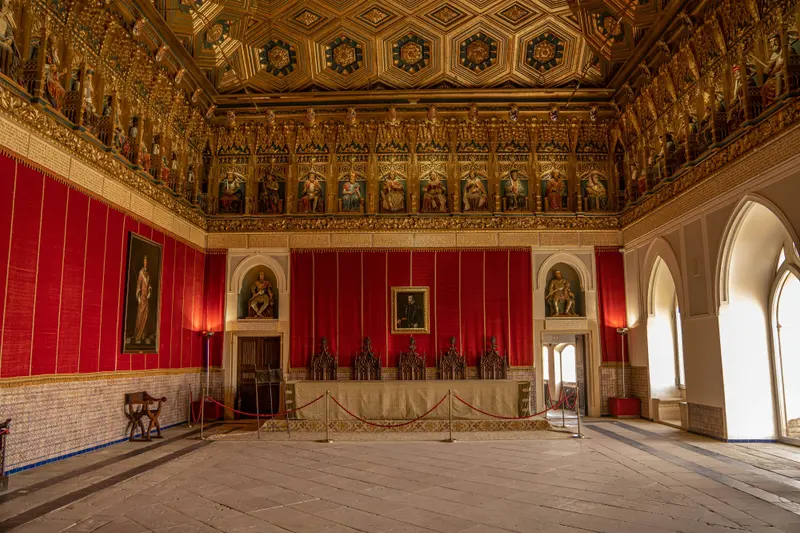
At Riofrío, the formal lines of the palace stand out against a woodland setting. At La Granja, the gardens and buildings together occupy a slope. The two royal sites have separate visits run by Patrimonio Nacional. Give the site you are most interested in the slot that suits its interior visit and add the other if the day allows it. A short Eresma walk is an alternative if one palace is enough for your group.
Romanesque sites beyond the city
At Sepúlveda, El Salvador and Nuestra Señora de la Peña show how churches and streets use the uneven ground above the river. At San Frutos, the position of the hermitage above a bend is part of what you have come to see. Check the approach and surface to the parking area before setting out. Rain makes some rural tracks harder to use, and a stop at the edge of the gorge can take longer than the distance suggests.
At Maderuelo, distinguish the Vera Cruz hermitage from its original wall paintings in the Prado in Madrid. Seeing the site helps explain the scale of the building the paintings came from. In the village, look at the entrance and the position of the houses above the Linares reservoir. This works as a short heritage stop when your main interest for the day is a walk in the Riaza gorge.
Museums and culture
The Royal Glass Factory in La Granja changes the scale of the visit from a palace to a workshop. Look at how the material is heated and shaped and how that informs the finished objects. Before booking for a live demonstration, ask what the visit includes on your day. Nearby, the National Centre for Environmental Education at Valsaín provides information about local woodland routes. A glass visit and a short walk make a useful combination in changeable weather.
In town, the Antonio Machado House Museum is on a domestic scale compared with the Alcázar and cathedral. Fit it into a walk through the upper streets if the hours suit. In Aguilafuente, the story of the Sinodal links the town to early printing in Spain. Look for a visit that explains how the document was produced and what it recorded. This can give structure to a day among the smaller settlements of the plain without depending on a full afternoon in one interior.
Charming villages
Pedraza and Sepúlveda
In Pedraza, enter on foot through the town gate, turn towards the arcaded square and keep the walk to the castle for the end. The streets narrow in places and make slow exploration easier than trying to move directly between three points. On a weekend, do a first circuit before lunch, then choose a place to stop without having to interrupt the rest of the walk.
In Sepúlveda, start in the square and choose whether to follow the streets uphill to the churches or down towards the river. Decide which town viewpoint matters most before changing levels. Pedraza in the morning and Sepúlveda in the afternoon work if you are mainly there to see the towns. To add a proper walk inside the gorge, keep one village for the next day.
Riaza, Ayllón and Maderuelo
In Riaza, the square is a good starting point for an old town walk and a place to orient yourself towards the mountains. Nearby villages are grouped by the colours of the stone and earth used in their houses. Pick two such as Madriguera and El Muyo and look at lintels, roof lines and corners. Much of the interest lies in how building materials change over a small area. A full circuit of every village makes it hard to linger at the places that explain that variation.
At Ayllón, see the square and bridge before looking for the outline of La Martina above the town. Maderuelo occupies a projection over the reservoir. When planning several stops, decide where you are going for lunch and which place you want in afternoon light. Two villages and one short countryside outing give the eastern end of the province a pace of its own.
Nature and protected areas
The Duratón gorges
The Duratón makes a sequence of deep curves. From above you can trace how the river has cut through the plateau. From a path at valley level you can see the scale of the walls. Start with the park’s information centre in Sepúlveda when deciding which route applies. Check park notices for your dates, particularly if your plan passes near a breeding area. Take binoculars for watching from the indicated places without having to leave the path.
The San Frutos viewpoint makes a strong introduction when its approach is usable. Keep an option near Sepúlveda that does not require driving the same track if conditions change. If you are taking a permitted paddling trip, find out what section it covers, where you finish and what the operator organises on your behalf. Walking and paddling trips can begin on different sides of the gorge.
The Riaza and the Guadarrama
For the Riaza gorge, the area of Montejo de la Vega de la Serrezuela is a practical starting point for learning about the park. Pick one section of trail. Pair it with Maderuelo if you are interested in the reservoir and how the old houses sit above the water. A straightforward walk and a little time watching birds can fill the morning without moving between several viewpoints.
On the Segovia side of the Guadarrama, the pinewoods of Valsaín are more sheltered than an exposed walk on the high ridges. If you want to climb higher, work from a map of the right side of the range and look at current access and walking conditions. Swap the high route for river or woodland if there is ice, wind or low cloud. That still lets you use the same base for La Granja and gives you a different part of the mountain landscape to explore.
Festivals and traditions
Cuéllar’s 2026 encierros festivities ran from 28 August to 3 September, according to the municipal programme. The route from country to town is part of the event’s local significance. For a later visit, check the schedule for that year. You can choose a town-centre event or visit outside the route of the bull run. Allow for street closures and agree how to meet again if some of your group go to a different part of town.
Holy Week processions in Segovia and towns including Cuéllar also use streets laid out long before modern crowds. Decide whether you want a large space with room to move or a quieter spot on a back street. Pedraza’s candlelit concert series changes access to its square and walled centre. Check the conditions for your chosen year before booking around it. The same square and streets are easier to explore independently on an ordinary weekend.
What to eat
In Segovia, the traditional roast is cochinillo, suckling pig. Check whether an asador serves individual portions or recommends sharing. Near Sepúlveda and in other towns, lechazo is roast suckling lamb. For a stay of several days, space the roasts out and keep the longest lunch for a day with an easy walk afterwards. That is a better way to fit the meal into the trip than setting off for a distant timed visit straight afterwards.
The white beans known as judiones de La Granja are a good choice on a cold day in the foothills. If you avoid meat, ask how the beans have been cooked before ordering. In the capital, try ponche segoviano, a cake covered with marzipan. A small piece is an easy afternoon stop. If you buy some to share later, carry it somewhere cool rather than leaving it in the car while you walk.
Before a rural day, decide whether you will have a full lunch, a picnic or a shorter stop. If you want a restaurant in a small town, book a table that allows you to finish the morning’s visit comfortably. For a trail day, get food before leaving the village and keep the sit-down meal for your return. When visiting from abroad, check when the kitchen serves before planning lunch around an early afternoon arrival or a late finish.
Sport and outdoor activities
The Eresma Valley Greenway reuses a former railway. For a cycling outing, pick a turning point with enough time left to return and check the surface of your section. Wind and heat are more noticeable out in the open. Carry water even if you intend to ride only part of the route. If you will hire bikes, confirm where to collect and leave them before deciding which end of the greenway to start from.
Choose the Eresma for shade and an easy turnaround, and a gorge route for an open landscape or a change between cliff and river. In the mountains, let climb and ground conditions carry as much weight as horizontal distance. For paddling on the Duratón, ask about launch and finish points as well as the restrictions that apply to your dates. Activities can be permitted in one section and restricted in another.
Routes and itineraries
Two days based in Segovia
Use the first day for the aqueduct, Plaza Mayor and the Alcázar. If you arrive late, save the descent towards San Marcos until morning and give the afternoon to the alignment of the Roman arches and supper in the centre. On day two, alternate the gardens at La Granja with a forest walk at Valsaín. If you are travelling without a car and the excursion connections do not work, use the second day for Segovia’s own valleys and the interior you missed the day before.
Three days with Pedraza and the Duratón
After a day in Segovia and a day around La Granja, move towards Sepúlveda and sleep there if you want to start from the town early. On day three, choose a trail or a viewpoint. See Pedraza on the afternoon transfer or on the way back, depending on how long you plan to walk. Give Coca and Cuéllar an extra day of their own if you want to see both. The two castles and a gorge are a long cross-province combination for a single day.
A weekend in the north-east
Sleep in Riaza or Ayllón. Spend Saturday in one of those towns and make a couple of shorter stops in the mountain villages. On Sunday, combine a section of the Riaza gorge with Maderuelo. On a short winter day, choose an observation point in place of a long trail and allow enough time to enter both towns on foot. This is a worthwhile trip for someone who already knows the city and wants to see a different corner of the province.
Travelling with children
Start with a place they can see and understand immediately. From the Azoguejo, count a stretch of aqueduct arches and look for those that get taller towards the square. At La Granja, choose one fountain to walk to and return along another avenue. Around Valsaín, plan a short walk where you can stop beside the Eresma and turn back if the weather changes or the children tire.
For the gorges, count the walking time before and after the viewpoint, and look at how uneven the approach is. A village square is a good stop after a short outing in a park. If you bring a pushchair, check gradients and surfaces in advance. Old towns have cobbled stretches, and the condition of a riverside path depends more on the weather than its appearance on a map.
Where to stay in Segovia province
In Segovia city, the aqueduct area makes the first walk easy, while a room near Plaza Mayor puts upper town sights at your door. Ask how to reach the accommodation with bags and where to leave the car. With two nights, you can have a full city day without moving the vehicle and pick it up for the rural excursion.
In La Granja or Valsaín, start your first walk close to a garden or pine forest. Sepúlveda works if your day is centred on the Duratón and you want to eat in the village on your return. Cuéllar is a better base for the castles to the west. Riaza and Ayllón make sense for a north-eastern weekend with early starts or several village walks. At a rural property, ask what food is available close by in the evening.
See places to stay in Segovia province (opens in a new tab)Affiliate link: if you book through it, we may earn a commission at no extra cost to you.
Practical tips and common mistakes
Save the full name of the point where each outing begins. Duratón and Riaza can refer to the river, a settlement or a protected landscape with several approaches. If your drive ends on a track at a small car park, keep a second plan that does not require doubling back along the same route. On the open plateau, wind can change a short stop before you notice it in a town below.
Give interiors the time they need. To compare castles, one guided tour and a well-chosen walk outside the other can be enough. A La Granja garden walk needs different footwear and more time on your feet than the glass factory. Before fixing two admissions on the same day, look at what lies between them and allow time from the car to each entrance.
Set the scale of each day in advance. The city is a walk between different levels, village country involves a sequence of drives, and a park outing starts with choosing a bank or slope. If the forecast changes, keep the area and change the activity. It is easier to move from a trail to a nearby town than to reposition a whole day’s travel.