

 Español
 English

Why visit La Alberca
Start in Plaza Mayor and leave by two different streets. The arcades and balconies catch your eye in the square. In the narrower lanes you can see how the timber frame and stone base fit together. You can spend the morning among the houses and set out into the woods in the afternoon without going back for your car.
The village lies in the south of Salamanca province, in Castile and León. According to the provincial council, it became the first Spanish village designated a historic ensemble in 1940. Look at the streets as a whole and use a visit to the house museum to make sense of what you see outside. The start of the Camino de las Raíces takes you into oak and chestnut woods with buildings and ruins scattered around the edge of the village.
When to go
Spring is a good time to spend a full day between the old streets and woods. In autumn, give yourself more time on the Camino de las Raíces for the colours of the oak and chestnut leaves. After rain the paving can be slippery and the paths muddy. In dry weather, go back to the square in the late afternoon to see the arcades away from the glare of midday.
In summer, do the exposed sections first and leave the woods or museum for later. Wind and cloud at the Peña de Francia can change the plan even if the weather is good in the village. The Diagosto festivities take over Plaza Mayor and the nearby streets in mid-August. If the festival is your main reason to come, check the programme. If you want to linger in the streets and walk at your own pace, choose a date away from the celebrations.
Getting there and around
From Salamanca, the council’s route goes through Vecinos and Tamames and continues along the SA-201. Explore on foot once you arrive. If you drive, look for signed parking by the edge of the village. For accommodation down a narrow street, check where you can drop your bags.
If you are travelling from abroad, plan the journey to Salamanca first and then the road leg into the Sierra de Francia. If you need public transport, check both directions before choosing your day. Distances between the square, church and museum are short, but the uneven paving and slopes may make a difference if you use a mobility aid. Confirm entrances separately for each indoor visit.
What to see in La Alberca
Plaza Mayor and the lanes around it
Walk around the edge of Plaza Mayor to see how the columns support the upper floors. From the middle you see the line of balconies, while from under the arcades you can see where the narrow streets begin. Use the square as a reference point, make a short loop to the church and then try an alley on the other side. The gaps between houses give brief views uphill and downhill.
The church and the stone pig
The Church of Our Lady of the Assumption is close to the square. Look up at the tower and walk round the outside before going in. The stone pig near the church refers to a tradition associated with Saint Anthony. It is easy to see if you look around the edges of the street on your way to the church. If the church is open, go inside for a change from the scale and light of the houses outside.
Monuments and heritage
In a traditional house, stone forms the lower part while timber is visible on the upper floors. At a crossing, look at one house head on and then look along the side of another. From these angles you can see how the upper storeys project over the street and how the pattern of timbers changes from one house to the next.
People live and work in these buildings. The public lanes are enough to see the lintels, covered passages and spaces between doorways. To understand the layout from the inside, go to the house museum and look for the way rooms with different functions are arranged one above another within a narrow frontage.
Museums and culture
The Sátur Juanela House Museum preserves a traditional home and shows how daily life was organised across the floors. Looking at spaces for work alongside living rooms helps make sense of the frontages outside. If the museum is an important part of your day, ask the tourist office how visits are arranged for your date.
The Las Batuecas–Sierra de Francia park centre takes a different approach, using models and displays to introduce the landscapes and wildlife. It is a good first stop if you are trying to decide between a valley walk and a summit visit. With children, use it to choose things to look for outdoors, such as the different leaves of oaks and chestnuts.
Neighbourhoods and areas
The most compact part of La Alberca lies between Plaza Mayor and the church. The emphasis shifts from the arcades to doorways, balconies and corners as you move away. Head towards the park centre on Avenida de Las Batuecas to see where the houses meet one of the roads out. If time is tight, stay close to the square and church and add the visitor centre when you are planning a walk in the park.
Nature and protected areas
The Camino de las Raíces, or Trail of the Roots, is one of the art trails in the Sierra de Francia. It starts in La Alberca and winds through oak and chestnut woodland. The provincial route passes the area of Majadas Viejas and the hermitage of San Marcos. Use these stops to notice how the ground changes between a clearing, stone ruins and the woods.
The park extends far beyond the trail. The Batuecas valley is narrow and enclosed, while the Peña de Francia looks across a broad sweep of hills. Choose one according to the weather and how much walking you want to do. The park visitor centre is a useful place to check access and path conditions before leaving.
Festivals and traditions
The council marks Diagosto on 15 August, the feast of the Assumption. The provincial guide checked in 2026 gives 16 August as the traditional day for La Loa. Use these dates to find the programme for your year. La Loa is a traditional religious play. The events in and around the square and church are a chance to see the dress and hear the music associated with the feast.
Saint Anthony’s festival explains the stone pig by the church. The council describes the local custom that ends with a raffle of the animal. Look up the programme before travelling for the event or use the story to make sense of the sculpture during an ordinary walk around the village.
Routes and itineraries
One day in the village and woods
Spend the first part of the day around the main square, church and the lanes between them. If you have arranged a house museum visit, keep the rest of the morning for it. In the afternoon, take the Camino de las Raíces. On a short day, walk part of it out and back. For the whole circuit, use the provincial map and allow time for Majadas Viejas and San Marcos.
Two days with a trip into the hills
Use the first day for the village and woodland. The next morning, go to the Peña de Francia if the summit is clear. If it is in cloud, try Mogarraz or Miranda del Castañar and spend the time walking through the village instead. Give a fixed time to any booked visit and let the weather decide what to do with the rest of the day.
Day trips
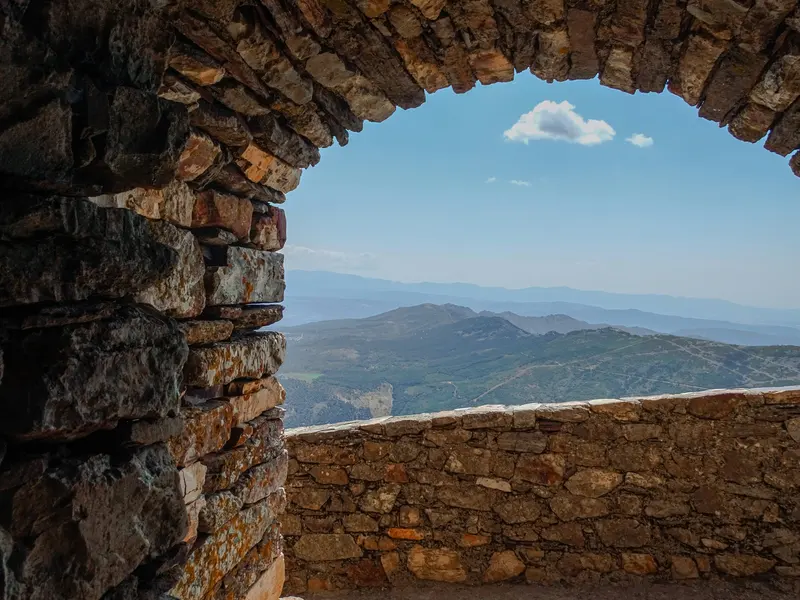
From the Peña de Francia sanctuary you can see ridges and valleys that are hidden by the forest when you are in La Alberca. Save the trip for a day with clear views and allow time for the last stretch of hill road.
In Mogarraz, portraits hung on the houses make the walk spread out through the village. In Miranda del Castañar, the walls and square beside the castle give the route a more obvious centre. Combine the two if you have a full day. With only an afternoon, pick one and give yourself time to look beyond the main street.
Where to stay in La Alberca
Stay in the old streets if you want to walk back after dinner and be on the woodland path early. Near an approach road it is easier to deal with luggage or set out by car. Check whether an address is in the village or stands by itself outside it. The distance shown on a map can feel different when there is an uphill walk to Plaza Mayor.
On a two-night stay, choose your base around the first outing of the day. For the Camino de las Raíces, a room in the village saves a separate journey to the start. If you are spending more time driving around the Sierra, look at road access and parking before choosing your accommodation.
See places to stay in La Alberca (opens in a new tab)Affiliate link: if you book through it, we may earn a commission at no extra cost to you.