

 Español
 English

Why visit Santa Cruz de La Palma
Approach Santa Cruz de La Palma from the harbour along Calle Real. A few blocks in, turn down to Avenida Marítima and look back at the same line of buildings from the direction in which people once arrived on the island. This short detour explains much of the town. The shopping street runs just inland, while a row of wooden balconies faces the Atlantic.
The capital of La Palma brings together several sights you can link on foot. Plaza de España contains a prominent collection of Renaissance buildings in the Canary Islands. Farther north, Plaza de San Francisco and the Alameda lead to the island museum and the Barco de la Virgen. Return by the beach and stop again in front of the balconies.
It makes a useful first base if you arrive by ferry or want to get to know the island before driving across it. A day gives you time for the two main streets and a museum. Stay overnight if you would like to see the squares uphill or visit both museums at an unhurried pace.
When to go
The old town works as a year-round visit. On a bright day, divide your time between the streets and the town beach. When clouds hang low, pick a museum first and save the seafront for better visibility. The facades along Calle Real show up well in soft light. Wind is usually more noticeable on the exposed waterfront than on the parallel streets inland.
If you are travelling for Carnival or the Bajada de la Virgen, decide how much time you want to spend at events and how much on the streets during an ordinary day. Squares and streets that are easy to cross on most mornings fill with people and serve a different purpose during celebrations. Use the council programme for your edition and move your walk to another day if a major event occupies the old town.
With several days on the island, use the contrast between the coast and the mountains to choose the order of your visits. Cloud over the high country can leave the town walk entirely manageable. If the sky is clear early on, the view towards the port from La Concepción gives you a sense of the terrain before you go down into the centre.
Getting there and around
La Palma Airport, code SPC, lies south of Santa Cruz. In 2026, airport operator Aena lists bus 500 as the link from the airport to Los Cancajos and the capital. Check which stop works for your address. The airport transfer involves sections of road best covered by bus, taxi or car. Once you reach the centre, continue on foot.
Ferry passengers usually enter from the south. Cruise ships use the harbour too, and the walk to Calle Real depends on your berth and where you leave the terminal. Find the pedestrian route out of the port and aim for Calle O’Daly. Side streets reconnect the shopping street with the seafront, so it is easy to improvise a loop.
Think in two directions. Towards the sea lies Avenida Marítima. Uphill, the slopes begin. From Plaza de España you can follow the coast almost in parallel all the way to the Alameda, making short detours to the squares inland. Allow time for gradients and uneven paving if you add San Sebastián or La Encarnación. They are short walks to take at a different pace from the beach promenade.
What to see in Santa Cruz de La Palma
Plaza de España from its corners
Cross Plaza de España before you enter a building. From one corner you can look towards the town hall. From another, the staircase and the position of El Salvador above the square are clearer. The height difference gives the square a shape you miss if you just pass on Calle Real. Look for the fountain, which brought a water supply into one of the town’s principal public spaces.
Municipal life, the parish and the commercial street are close together here. The square creates a break in the main route before the hillside starts. With limited time, walk around the perimeter and go back to the church later. When the shopping street is busy, the corners offer some space to stop.
Calle Real and the Avenida Marítima balconies
Calle Real includes the stretches known as O’Daly and Anselmo Pérez de Brito. Follow it towards the Alameda and notice how its width changes and where doors and side streets interrupt the route. Go down to the water to return. Avenida Marítima gives you room to stand back from the balconies and pick out the depth of the projections, their screens and their woodwork.
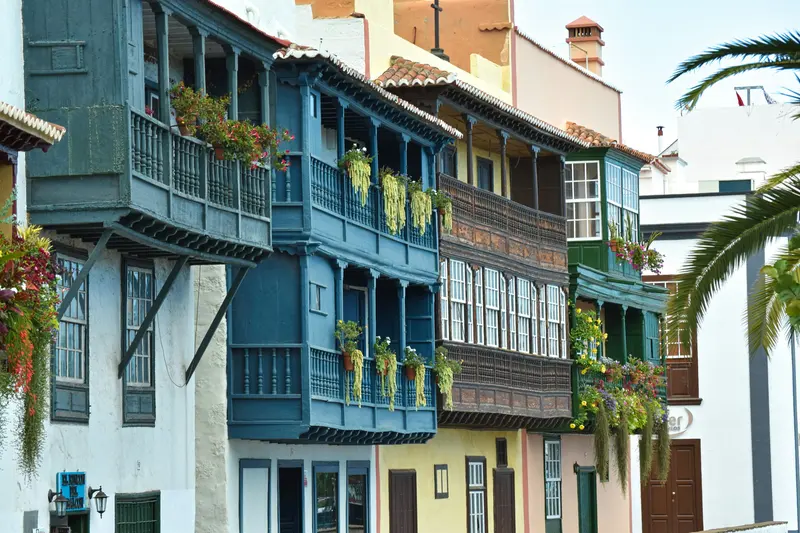
Walk past the row before turning to look at it again. The angle helps show the depth of the facades. Then step back inland. The scale of the shops and junctions along Calle Real is easier to appreciate after looking at the seaward side of the block. The loop also gives you a distinct stretch of promenade beside the beach.
Alameda, Barco de la Virgen and the north end
The character of the walk changes at the Alameda. The Barco de la Virgen sits on land and brings the town’s seafaring past into a walk through residential and civic streets. Start with the exterior and go into the Naval Museum if it is open. Continue towards Santa Catalina castle on the coast and follow the beach on the way back.
For more streets and hills, use the Alameda to see how the town narrows to the north. You can walk towards La Encarnación and return to the main route as soon as you like. The Alameda also makes a useful turnaround point if you have a sailing to catch. From there, head south along the water or through the centre.
Monuments and heritage
El Salvador and the town hall
The church of El Salvador and the town hall can be seen together from Plaza de España. Compare the stonework on the two facades. Move between the different levels of the square to appreciate the church tower, staircase and entrances. The town hall forms the civic edge of the square, directly beside the approach from the shopping street.
The square is worth walking around when the buildings are closed. From there, continue to Plaza de Santo Domingo to see a different arrangement of church, street and slope. Alternate a view of the whole space with a closer look at details such as the roof edges, plinths and how doors meet the sloping ground.
Santa Catalina castle and the defence of the coast
Santa Catalina stands on the waterfront. From outside, look at how the fortification sits between the town and the sea. Its position makes it possible to relate the castle to the harbour and the defensive role of the coast. The bulk of the walls also gives you something to compare with the residential facades farther south.
The Naval Museum covers ships and seafaring. At the fortification, focus on the position of the town behind it and the approaches from the Atlantic. Taken together, the two visits explain why the port matters to the story of the old town.
Museums and culture
Museo Insular at San Francisco
Approach via Plaza de San Francisco. The former convent gives the walk a courtyard and a change of scale after the seafront and the shopping street. The Museo Insular covers art and island heritage. Spend a little time looking at how the rooms fit into the historic building as you move between exhibits.
A walk from Plaza de España to San Francisco brings together spaces shaped by local government, commerce and the convent. With a short morning, make this your main museum and continue to the Alameda afterwards. If you want to see both museums, use the walk to the castle or coastline as a break between them.
Naval Museum and Barco de la Virgen
The museum occupies a replica sailing ship on the Alameda. It is easy to spot from a distance and introduces the role of Atlantic travel before you go inside. The visit helps link seafaring to the layout of the harbour and to the commercial life that gave the old town its buildings.
The museum fits especially well after starting out at the harbour. Go back to the sea by Santa Catalina afterwards to bring the story back to the landscape. If time is tight, walk around the ship from the square and look at how much space opens up at this end of the town.
Neighbourhoods and areas
The lower route through the old town. Shops, churches and squares follow one another from the harbour end to the Alameda. This is the easiest stretch to combine with architectural stops and a return by the sea. If you are visiting several buildings, finish with the one farthest north and close the loop on the beach promenade.
San Sebastián and the hillside streets. The land rises quickly behind the squares. Go up to San Sebastián for a look at the quieter residential side of urban life. The chapel and the nearby streets work as a short out-and-back detour. On the way down, look for the sea between junctions and head towards Plaza de España.
San Francisco and the Alameda. This part of town is easy to divide between a museum, a square and time outdoors. When travelling with children or with someone who needs breaks, you can go straight down to the sea instead of retracing Calle Real. The open promenade gives you a clearer idea of the distance back south.
Beaches in Santa Cruz de La Palma
The town beach and promenade
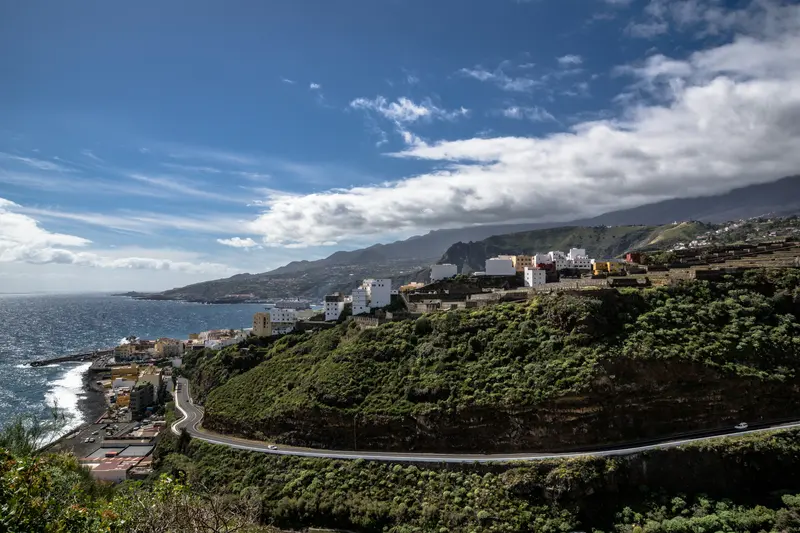
Santa Cruz beach runs beside Avenida Marítima. Dark sand and the old town are close enough to include on the same walk. You can stay on the promenade if the water looks rough. Facing inland here, notice how the buildings lie between the slopes and the shore. The castle gives you a reference point at the northern end of the walk.
Allow a separate stop if you plan to swim. Follow local signs and make the decision according to the sea conditions that day. For a shorter outing, start with the balconies, walk far enough along the promenade to see the row from an angle and return to the centre through a different side street.
Festivals and traditions
Los Indianos ties Carnival to the memory of emigrants who returned from the Americas. White clothes and talcum powder are part of the event. In 2026 the council scheduled Los Indianos for 16 February, the Monday of Carnival. If Carnival is the purpose of your trip, use the council programme to work out where to start and how long to spend in the crowds.
The Bajada de la Virgen de las Nieves changes the town on a five-year cycle. The devotion connects the hillside sanctuary to the centre and includes events such as the Dance of the Dwarfs. The movement between the two places explains the celebration as much as any individual event. Outside the festival, visit the old town and Las Nieves separately to understand the two settings.
Routes and itineraries
Half a day from the harbour. Enter via O’Daly, stop at Plaza de España and walk to San Francisco. Choose the Museo Insular or carry on to the ship at the Alameda. Return along Avenida Marítima and save the balconies for the way back. If you need to shorten the loop, skip the beach and the hillside.
A day with both museums. Start with the civic buildings and take the uphill detour to Santo Domingo or San Sebastián before your first museum. After San Francisco, continue to the Naval Museum and finish with the castle and beach promenade. If a museum is closed, extend the walk into the north end or go down to the water earlier.
A second morning. Give the hillside a separate visit. Arrange transport to the Las Nieves sanctuary and save the centre for a square or museum afterwards. You can add La Concepción if visibility is good enough to see the harbour from above. The viewpoint lies in Breña Alta and involves a separate transfer.
Day trips
Los Cancajos and the east coast. In Breña Baja, the Los Cancajos seafront makes an easy coastal outing before returning to Santa Cruz. It works well if you have already seen the squares. The coves and stretches of volcanic rock give you a different way to explore the shoreline from the capital’s town beach.
Caldera de Taburiente and the Aridane valley. The visitor centre in El Paso introduces the national park before you decide whether conditions suit a visit to La Cumbrecita. Los Llanos de Aridane has an old town and an archaeology museum on the west side. A brief town visit and a viewpoint can fill a day, with a long hike saved for another outing.
Travelling with children
Give the old-town walk three recognisable stops: Plaza de España, the ship and the beach. In between, use the balconies to compare colours, shapes and how far they project from the facades. The promenade gives you an easy way to cut the day short. In rough weather, the ship and a shorter seafront walk still make a worthwhile outing.
Where to stay in Santa Cruz de La Palma
Look in the old town to walk straight onto Calle Real and return between visits. Avenida Marítima works well for a beach walk at the start or end of the day. Above Plaza de España, check the gradient of the last stretch. An address that looks close can involve several uphill streets, which affects the walk with luggage.
For a ferry-based trip, check the route between the terminal and your door. If you will use a car to get around the island, decide where to leave it before choosing a street in the centre. Los Cancajos is another base between the airport and capital, with its own shoreline. Decide whether you want to walk into the city every day or visit it on a separate outing.
See places to stay in Santa Cruz de La Palma (opens in a new tab)Affiliate link: if you book through it, we may earn a commission at no extra cost to you.