Español
 English

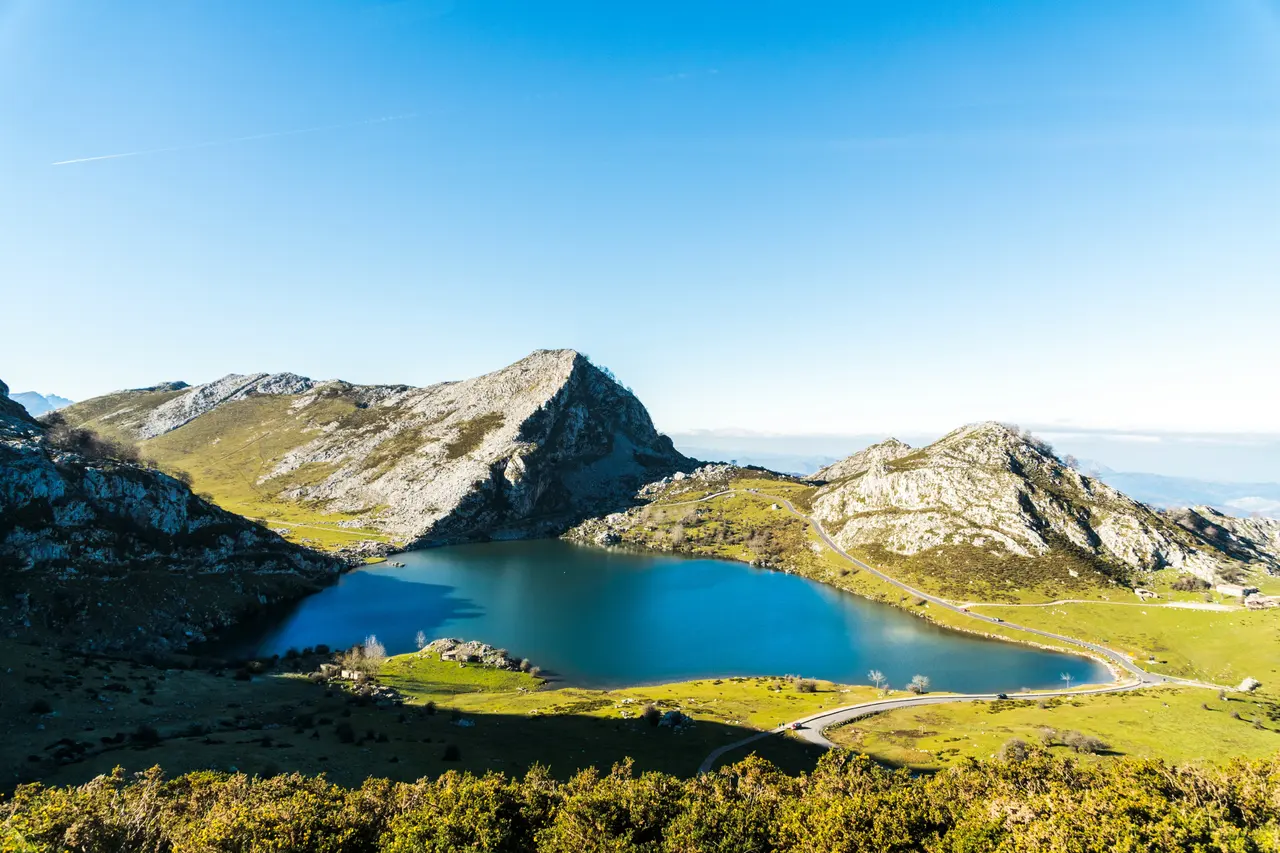
Why visit Llanes
Among the best things to do in Llanes are three you can fit into a morning on foot. Start in the medieval old town, follow the harbour to the painted blocks of the Cubos de la Memoria and climb to the grassy San Pedro promenade. Later, pick a beach in town or keep walking along the coast towards Poo.
On maps and signs, Llanes can mean the town or the wider municipality, known in Asturias as a concejo. The town makes a good base. Barro, Niembro, the beaches around Naves and the cliffs at Pría are all west of it. Andrín, Vidiago and Pendueles lie east. Explore one side at a time so you have room to walk down to a beach or stop in a village. You can also use Llanes as a base for trips further afield in eastern Asturias.
When to go
Late spring and early autumn suit a trip built around walks. Pack a waterproof even in summer. If the morning starts grey, see the old town and harbour first. El Sablón Beach is close enough to visit later if it brightens up.
For a beach holiday, choose July or August and give yourself time to walk to the sand. If you want to stay near the harbour during a festival, book ahead. On winter days with strong winds or coastal warnings, swap the cliffs for the old town or a museum.
Getting there and around
The A-8 motorway links Llanes with Ribadesella and central Asturias to the west and Cantabria to the east. Park once for a day in town. For trips along the coast, group stops on the same side of Llanes. Torimbia, Gulpiyuri and Pría fit together better than any of them with Andrín.
In 2026, Llanes is on Renfe’s R-2 regional line between Oviedo and Santander. Locals may still call the narrow-gauge railway FEVE, and you may see the name Cercanías AM elsewhere on the network. Look for the R-2 regional service when checking Llanes. Alsa lists coaches connecting Llanes with Oviedo and Santander. If staying in a village, check the exact stop and work out how to get back if you miss your planned service.
If flying, compare the total journey from Asturias Airport and Santander Airport to your accommodation. In 2026, Aena lists Alsa coaches from Asturias Airport to Oviedo and a bus from Santander Airport to Santander bus station. From Madrid, one option in 2026 is a Renfe train to Oviedo, then a coach or regional train to Llanes. If you are hiring a car, compare collection at the airport and in town, taking the transfer and your arrival time into account.
What to see in Llanes
Things to do in Llanes old town and harbour
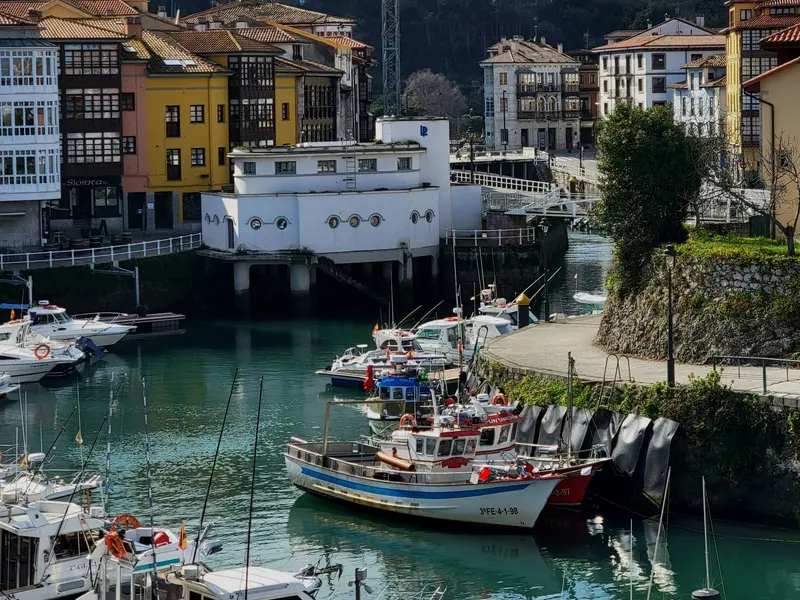
Begin in Plaza de Cristo Rey by the basilica, then make your way through the old streets to Plaza de Santa Ana. Look for the tower and surviving wall. Head down to the bridge over the Carrocedo river to see how the streets open onto the water and the harbour leads out to sea.
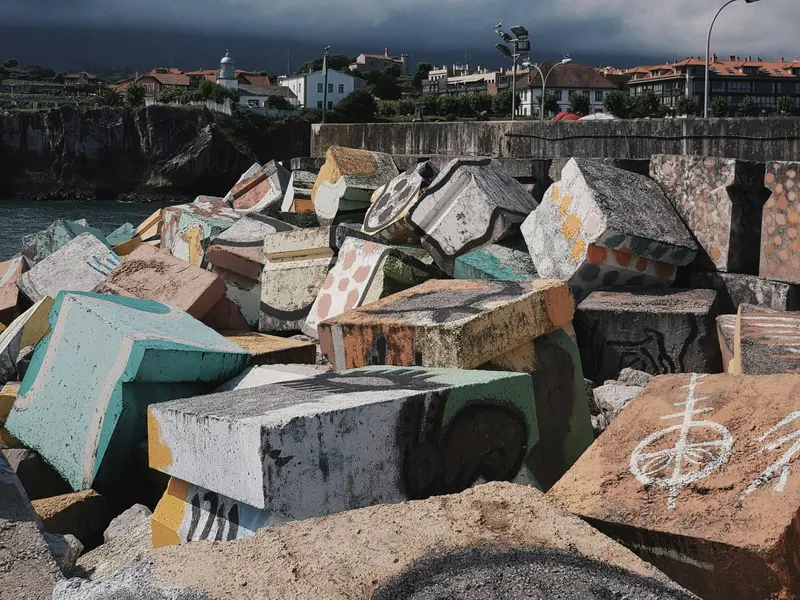
The Cubos de la Memoria are working breakwater blocks painted by the artist Agustín Ibarrola. Pause at different points around the harbour. Shapes that line up from one angle break apart from another. Stick to the public promenades, especially when waves are breaking against the harbour wall.
San Pedro promenade and the walk to Toró
Climb from El Sablón to the San Pedro promenade. The first stretch gives you a view down to the beach and over the rooftops to the Cuera mountains. The walk is grassy and can be slippery after rain. Wear shoes with grip and keep well back from the cliff edge.
On the other side of the harbour, follow the San Antón promenade past Puerto Chico to join the path to Toró Beach. It is a convenient way to add a second beach without moving the car. If you are short on time, pick San Pedro for the view over town or Toró for a spell by the water.
Monuments and heritage
At the Basilica of Santa María del Concejo, look at the doorways and the way the church sits between the square and the surrounding houses. Find the chapel of Santa Ana and the Gastañaga palace nearby. You can see their exteriors during a walk around town even when the doors are closed.
The area around the Casino and the streets outside the old core show a different period of the town’s history. Some emigrants returned from the Americas with enough money to build large houses with gardens. These are the casonas de indianos, which you can look for from the street. Respect private drives and gardens.
At Puertas de Vidiago, the Peña Tú rock shelter preserves carvings and paintings on a rock below the Cuera mountains. Pair it with a day east of Llanes. Check visitor instructions before the climb and use the designated viewing area.
Museums and culture
In Porrúa, the Museum of Eastern Asturian Ethnography shows how people lived and worked in the surrounding villages. The household objects and tools give you some context for the old kitchens and farm buildings you see around the municipality. Check that the museum will be open if you are counting on it for a rainy day.
The Llanes de Cine trail links places used in films and television. Pick up the trail in town or use it to tie together a few stops east of Llanes. La Boriza viewpoint and the cliffs near Puertas de Vidiago are among the locations you can recognise on that outing.
Neighbourhoods and areas
The centre, El Cuetu and La Portilla
Most first-time stops are between the old town and the harbour. Walk up to El Cuetu for the chapel associated with the La Guía festival. For a more sheltered outing, take the riverside path through La Portilla towards Pancar. You reach the river scenery without going far from the town streets.
Poo, Celorio, Barro and Niembro
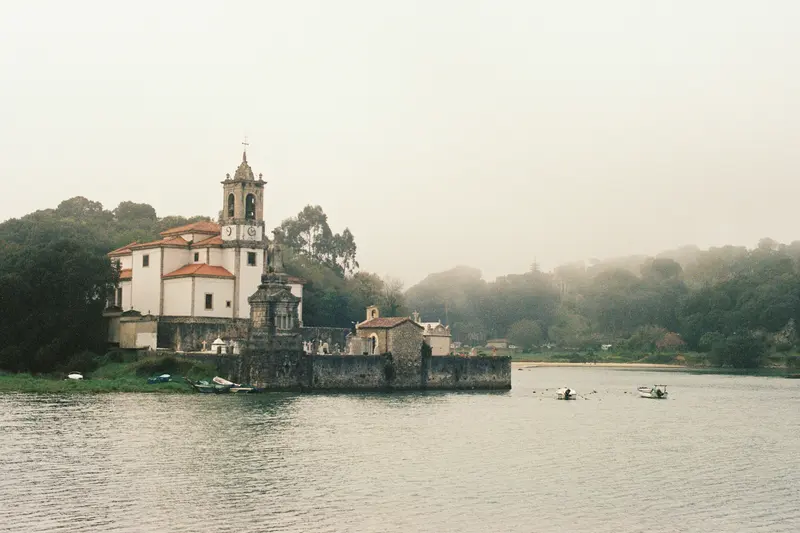
Poo and Celorio are linked by the coastal path west of town. Beyond them, allow time for the inlet between Barro and Niembro and the church of Nuestra Señora de los Dolores. The water level changes the view as the tide turns. Take in the church and shoreline from a safe stopping point clear of the road.
Posada, Nueva and the villages to the east
Posada de Llanes sits between the inland villages and the coast around Barro and Niembro. From Nueva, you can explore the San Jorge valley, Cuevas del Mar and Pría. For a day on foot east of Llanes, look at the coastal path around Vidiago and Pendueles.
Nature and protected areas
The Pría and Arenillas blowholes
The local word bufones refers to openings connected to sea caves. Waves push air through gaps in the rock, sometimes sending up jets of water. A swell around high tide makes these more likely. In calm weather you may only hear air escaping or see the openings in the cliff.
For Pría, head to Llames de Pría, about 22 km from Llanes according to the council’s route, then continue on foot. The Arenillas blowholes, a protected natural monument, are near Puertas de Vidiago. At both sites, keep away from the holes and cliff edges. If there is a coastal warning, skip the exposed coast and choose a sheltered walk.
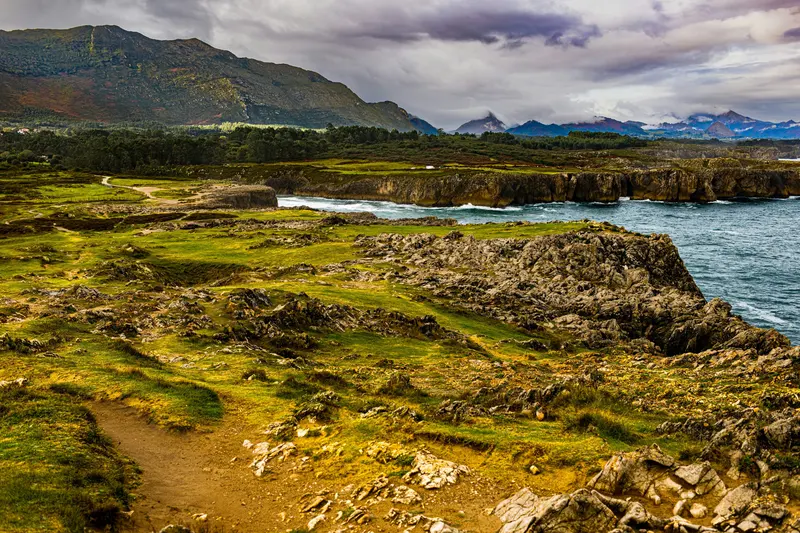
The Cuera mountains
The Cuera range rises between the coast and the interior. You can see it from San Pedro and from the villages at its foot. For a walk in the hills, download a map and check the forecast for the elevation you plan to reach. Mist makes it harder to navigate the limestone terrain.
Beaches in Llanes
El Sablón and Toró, two beaches you can walk to
El Sablón sits under the San Pedro promenade by the old town. It is the simplest option for a quick beach visit. At Toró, look for the pointed rocks rising out of the sand. Give yourself time to explore the shore and check conditions before entering the water. Puerto Chico lies between the two and makes a natural pause on the walk from San Antón.
Poo, Borizo, Barro and Torimbia
The sea enters Poo through a narrow opening. At high tide on a calm day there can be sheltered water. At low tide the waterline moves away from the beach entrance. Borizo, also spelt Borizu, is near Celorio. Barro is another option for families who want to avoid a long walk down to the sand.
Torimbia is a broad, exposed beach below a hillside near Niembro. Allow time to walk back uphill. It has a tradition of nude bathing. If you mainly want the view, linger above the beach and leave time for the Niembro inlet.
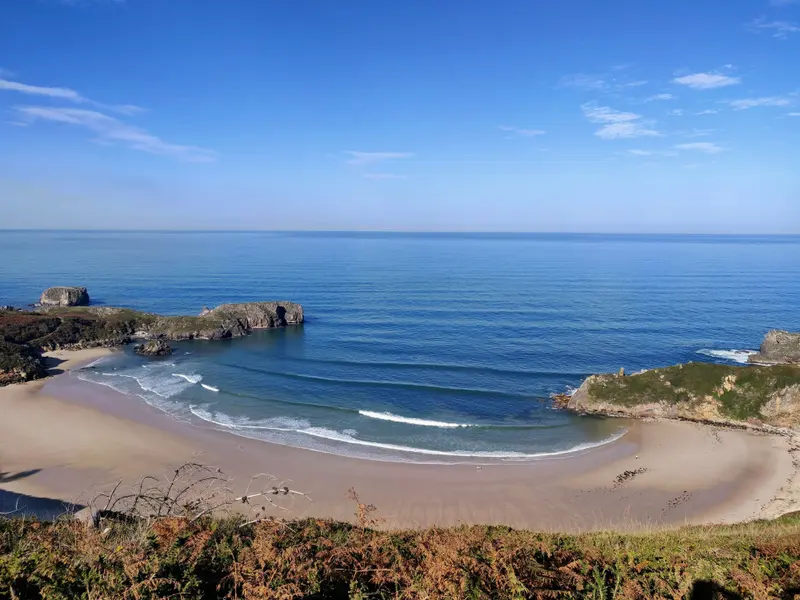
Gulpiyuri and Andrín
Gulpiyuri, near Naves, is a tiny protected beach fed by seawater through the rock. High tide can leave very little sand. Make it a short stop on foot and pick another spot if you want to swim. East of Llanes, you can see both Andrín and Ballota from La Boriza viewpoint. Check the flag and sea conditions at beach level before deciding whether to get in the water.
Festivals and traditions
Three local groups, called bandos, organise La Magdalena, San Roque and La Guía in Llanes town. Watch for the way street processions bring the groups together with music and dance. The following dates come from the town council’s 2026 listings.
- La Magdalena, 21 and 22 July 2026. The programme included a bonfire and a procession, with events in the old town and around the harbour.
- San Roque, 14 to 16 August 2026. The council listed a procession returning the saint’s image to its chapel and a performance of the Pericote de Llanes, a local dance.
- La Guía, 7 and 8 September 2026. The programme listed an evening procession on the first day from the chapel in El Cuetu to the basilica, as well as the Danza de Arcos and Danza Prima.
For a future trip, look up that year’s programme before booking around a festival. Check the venue as well as the name. Other villages in the municipality can hold celebrations for the same saint.
Sport and outdoor activities
The coastal path from Llanes to Celorio goes past Poo and San Martín to Las Cámaras Beach. Turismo Asturias puts the one-way route at 7.6 km and estimates three to five hours. If time is tight, walk to Poo and double back. Check your return if going all the way to Celorio. Around San Martín, use the path and avoid shortcuts along sand or rock as the tide rises.
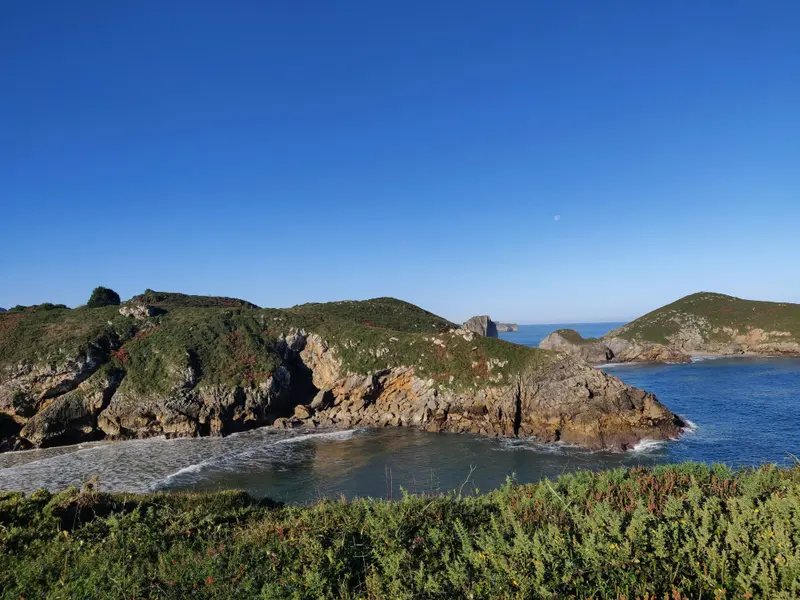
Turismo Asturias lists about 16.5 km for the coastal walk from Pendueles to Llanes. It passes Vidiago, Arenillas and the Purón river. Allow much of the day and bring water and shoes with grip. The Camino del Norte, the northern pilgrimage route to Santiago, also crosses Llanes. Follow its markers if walking a stage and check your map for where it diverges from the coastal trail or the paths down to beaches.
Routes and itineraries
One day. Start with the basilica, the wall, the harbour and the painted blocks. After lunch, go up to San Pedro. If you still feel like walking, head back through the harbour and go on to Toró along San Antón.
Two days. Spend day two at the Niembro inlet and Torimbia, with a short stop at Gulpiyuri if tide and sea conditions suit. Without a car, spend the day on the path to Poo and Celorio, leaving time for one long stop and arranging your return in advance.
Three days. Head east to La Boriza and Puertas de Vidiago, or see the coast beyond Nueva and near Pría if conditions allow. For a longer holiday with Llanes as a base, see Eastern Asturias in 5 days.
Day trips
Ribadesella
Start at the mouth of the Sella and cross the river to the Santa Marina seafront to see the houses along the promenade. If prehistoric art interests you, check whether you can visit the Tito Bustillo cave or plan to see the interpretation centre. Decide before dividing your time between the old town and the other bank.
Cangas de Onís and Covadonga
Pair the bridge at Cangas de Onís with the shrine at Covadonga. Set aside additional time for the lakes. In 2026 the official access plan regulates private vehicles on certain dates and provides public transport. Check your date and departure point before setting out. If mist covers the hills, visit the shrine and save the lakes for another day.
The Picos de Europa via Cabrales
On the Cabrales side of the Picos de Europa, use Arenas as a waypoint for Poncebos, Bulnes or the Cares Gorge. The Cares path connects Poncebos and Caín and has exposed stretches. If you plan to walk out and back, allow for twice the one-way distance. Check conditions and how to reach the trailhead. Pick a shorter outing if the group is new to mountain walking.
Travelling with children
Alternate short walks with stops where children can move around. El Sablón is close to the old town. At the harbour, see how many colours and shapes they can spot on the painted blocks from the promenade. For a longer stretch on the sand, choose one beach such as Poo or Barro and decide whether to go in based on the flag and conditions.
In the Ardisana valley, figures from Asturian folklore stand beside the Camín Encantáu trail. With younger children, try a short section and turn back along the same path if they get tired. On a showery day, the museum in Porrúa gives you an indoor stop and the chance of a short walk if the rain lets up.
Where to stay in Llanes
In town. Choose the centre or harbour for evenings on foot and for easy access to the train or bus. If bringing a car, ask about parking and dropping off luggage. Around Toró you can start the day by the beach and walk back into town later.
In Poo or Celorio. Choose one of these if you want to spend several mornings by the sea. Check the walking route to the beach as well as where you will shop or eat dinner. A room near the water and one near the main road can make for quite different stays.
Inland. Porrúa and the Ardisana valley suit visitors with a car who want to alternate coast and countryside. Posada is practical for combining inland stops with western beaches. Check the travel time to the places you most want to see, especially if you plan to return to your accommodation before dinner.
See places to stay in Llanes (opens in a new tab)Affiliate link: if you book through it, we may earn a commission at no extra cost to you.